Finding enough skilled workers remains one of the biggest challenges facing equipment manufacturers, dealers, and businesses across agriculture and construction. Yet according to Julie Davis, senior vice president of people strategy with the Association of Equipment Manufacturers (AEM), the industry’s response has evolved far beyond simply acknowledging the problem. Today, many manufacturers are taking deliberate action to strengthen the workforce pipeline at every stage, from introducing middle school students to technical careers to creating long-term development opportunities for experienced employees.
The effort is highlighted in a new AEM workforce development report that showcases how equipment manufacturers are tackling workforce challenges through innovative recruiting, employee retention strategies, and educational partnerships.
For many employers, success starts with rethinking how they recruit new talent.
“The strategy that is working today is not doing one thing,” Davis said. “It is doing multiple, multiple things.”
Rather than relying solely on traditional recruiting methods, manufacturers are expanding their reach into a variety of talent pools and community organizations.… Continue reading
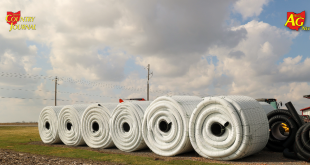
Have you ever wondered how much water a drain tile removes? Does a larger outlet pipe drain a field faster? Are there differences in drain pipes that would affect the amount of drainage? Let’s explore some of these questions.
Does drainage water always flow downhill? Drainage theory seems simple: water flows downhill! In other words, gravity plays a major role in driving the movement of drainage water from one location to another. However, the actual flow lines of drainage water leading to lateral pipes are not straight lines. Because the actual opening on a drain pipe is much smaller than the 4-inch diameter, the flow lines converge radially around the drain pipe. So in reality, it may look like the water is moving up in the soil profile against gravity.
How much water a drain tile would remove is decided by two main factors: (1) the soil, and (2) the pipe.
Finding enough skilled workers remains one of the biggest challenges facing equipment manufacturers, dealers, and businesses across agriculture and construction. But rather than simply talking about the problem, many companies are taking action to build the workforce of tomorrow. Julie Davis, senior vice president of people strategy with the Association of Equipment Manufacturing, tells the Ohio Ag Net’s Ty Higgins what her organization is telling members about maintaining a solid workforce for the long term.… Continue reading
Ohio farming fatalities are not equally distributed over the year. As temperatures go up, so do the statistics. In this Ohio Ag Net featured audio, Joel Penhorwood talks with Dr. Dee Jepsen, professor of agricultural safety and health at Ohio State University, about the leading causes of farm machinery fatalities and the simple steps that can save lives. The conversation covers rollover protection and seatbelt use, roadway safety during the busy growing season, PTO hazards (plus the success story of PTO incidents over the years), and the often-overlooked dangers of tractor runovers involving children and bystanders.
With tractor and machinery incidents accounting for the majority of Ohio’s farm fatalities, Dr. Jepsen offers practical reminders to help ensure everyone makes it home safely at the end of the day.
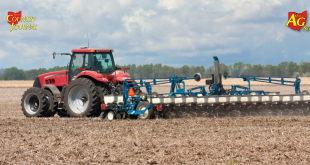
Corn and soybean fields across Ohio are emerging, and at first glance, many look good from the truck window. But early emergence is the best time to step into the field and take a closer look. A short scouting trip shortly after emergence can reveal planter performance issues that affect yield long before showing up at harvest.
Emergence uniformity is critical for corn yield. Research, including work done at Ohio State University, consistently shows that corn plants that emerge later than their neighbors rarely catch up. Even short delays in emergence can hurt individual plant yield and reduce overall field performance. Ohio State studies have found that if half of a corn stand emerges about a week late, total field yield can drop by 5% to 10%, even when the final plant population still looks good. That yield loss occurs because early emerging plants outcompete later-emerging ones for sunlight, water, and nutrients.… Continue reading
Talking farm equipment, auctions and current trends with Craig von Stein, Equipment Division Manager with Dye Real Estate. The Ohio Ag Net’s Ty Higgins asks von Stein about what the used equipment market looks like right now and if there are specific types of equipment seeing strong demand.… Continue reading
If you are looking for some summer opportunities for your kids, see if they are ready to learn about careers in Ohio’s No.1 industry. With the upcoming ExploreAg camps, they will be immersed in a hands-on experience to discover careers in food science, agronomy, precision technology, food manufacturing, animal care, and more – the possibilities are endless! Find out all about day-long and week-long ExploreAg camps on this Ohio Ag Net Podcast.
Plus, we’re talking farm equipment, auctions and current trends with Craig von Stein, Equipment Division Manager with Dye Real Estate. On this episode, von Stein talks about what the used equipment market looks like right now and if there are specific types of equipment seeing strong demand.
By John Fulton and Elizabeth Hawkins, Ohio State University
Many Ohio farmers use precision agriculture tools every day, such as yield maps, GNSS guidance, and variable-rate technology, to manage crops more efficiently. Precision conservation builds on those same tools, but with a different goal to help farmers decide where conservation practices make the most sense on their farms.
Simply put, precision conservation means using field data to target conservation practices to the acres that need them most. Instead of treating every acre the same, it looks at multi-year yield maps, profit maps, soil type, drainage, and topography to identify spots that consistently lose money or create management challenges. These may be wet holes that never dry out, eroded slopes, compacted headlands, or field edges that rarely produce a payback. Rather than continuing to invest seed, fertilizer, and time in those areas, farmers can shift them into conservation practices that improve both profitability and environmental performance.… Continue reading
By Laura Akgerman and Dee Jepsen, Ohio State University
Spring is a good time to try new tools and equipment, especially if those tools can boost productivity while making farm work easier and safer. The Ohio AgrAbility Program primarily serves farmers with disabilities, yet many of the tools and technologies we promote are examples of universal design, which is equipment that can benefit people of all abilities.
In March, our Ohio AgrAbility staff attended a conference highlighting equipment and practices that might be of interest to our Ohio farmers, specifically those with livestock. This article shares two ideas for gates and feeding chores.
Gates. One area of focus is opening and closing gates, a task that requires pushing, pulling, sustained grip strength, and awkward bending or stooping. Uneven or muddy footing can increase the risk of slips, trips, and falls, especially during wet or icy conditions. Climbing on and off a tractor multiple times to open and close gates can aggravate arthritis, chronic pain, or mobility limitations.… Continue reading
By Dee Jepsen, Wayne Dellinger, Amanda Douridas and Rob Leeds
Off-highway vehicles (OHVs) were originally designed for recreation, but their versatility has made them popular for work and transportation in rural areas, farms, and small communities. All-terrain vehicles (ATVs), utility terrain vehicles (UTVs), and recreational off-highway vehicles (ROVs) are now used for hauling equipment, maintaining property, and traveling short distances.
As their use expands, so do concerns about safety. Those concerns were addressed at the 2026 Ohio Safety Congress, with a three-hour workshop focused on the safe operation of OHVs in worksites, communities, and agricultural settings. The session highlighted the 3E Model of Safety — Engineering, Education, and Enforcement — as a comprehensive approach to reducing injuries and fatalities.
Engineering: Understanding vehicle design
OHVs have unique design features that distinguish them from passenger vehicles, motorcycles, and tractors. Understanding these characteristics is essential for safe operation.
By Andrew Klopfenstein, John Fulton, Elizabeth Hawkins, and Scott Shearer
By any measure, timing matters in crop production. When water or nutrients are applied too early, there is a risk of loss through runoff or leaching. Too late, and the yield potential could be lost. New research led by The Ohio State University suggests autonomous irrigation technology may help Ohio farmers thread that needle more precisely than ever before.
Results from multi-year field research in central Ohio show that autonomous, high-clearance irrigators can improve crop yields, nutrient use efficiency, and resilience to weather stress. The work, conducted by Ohio State in collaboration with Iowa State University and the 360 Yield Center, evaluated a high-clearance robotic irrigation system capable of traveling over standing corn and soybeans to apply water, liquid nutrients, or manure at any growth stage.
Unlike traditional irrigation or fertilizer application systems, the autonomous irrigator operates independently and delivers inputs directly to the base of the crop canopy.… Continue reading
Demand for farm equipment can vary depending on the time of year and region, according to Martin Schuh, territory manager with Purple Wave Auctions. While tractors tend to move year-round, items like combines and headers often see increased interest depending on seasonal needs as farmers prepare for planting or harvest.
Schuh said Purple Wave operates using a no-reserve auction format, which encourages competitive bidding among buyers and helps determine the true market value of equipment.
“For the seller, what we’re really offering is a market,” Schuh said. “We’re bringing together a group of buyers who are interested in that equipment and letting them compete for it.”
According to Schuh, allowing buyers to compete without reserve pricing often leads to stronger participation and more accurate pricing driven by the market.… Continue reading
By Dara Barclay, Elizabeth Hawkins and John Fulton, Ohio State Extension
As we move well into 2026, it is worth reflecting on the challenges that defined the 2025 growing season and what Ohio farmers learned from them.
The latest edition of the eFields Research Report delivers timely, data-driven insights to help inform critical management decisions this season. The 2025 report highlights 102 on-farm, field-scale trials conducted across 29 Ohio counties. Research topics span nutrient management, disease management in corn and soybeans, biological products, drone use for seeding and applications, and cover crop management. Growing interest in organic farming systems is reflected in the expansion of organic-focused research, increasing from eight trials in 2024 to 12 studies in 2025.
New additions to this year’s report include trials on sunflowers and flint corn, along with the launch of a statewide Tar Spot Surveillance project. This multi-year effort, continuing into 2026, aims to better understand the environmental conditions that favor tar spot development and its impact on yield.… Continue reading
Achieving consistent planting depth remains one of the most important—and most challenging—steps in establishing a uniform, high‑yielding corn crop. Variability in soil type, moisture, and residue across fields often causes row units to ride up or sink, leading to shallow or inconsistent seeding. Recent multi-year research from Ohio is helping clarify just how much planting depth and downforce matter—and what growers can do to manage both more effectively.
A three-year Ohio State University study found that final planting depth frequently differed from the target depth, with seed placement tending to be shallower than intended across a wide range of soil conditions. Soil texture, moisture, and field topography were the three primary drivers of depth variability. The study also confirmed that planter downforce settings significantly influenced final depth, with higher downforce increasing seeding depth on average by about 0.1 inch when increasing from 100 to 200 lbs.… Continue reading
Join us for this ride along video with field service technician Travis Luman of AgRevolution as we head to a Ross County Farm. We hear his thoughts about maintenance programs, what a day in his life is like, and some simple advice to save time and money down the road as the muddy season approaches.
A recent policy move by the Federal Communications Commission could reshape how farmers use drone technology in the field, raising concerns about access, affordability and long-term innovation in agricultural spraying.
Earlier this month, FCC Chairman Brendan Carr released a ruling that would place future foreign-made drones, along with key telecommunications and flight components, on the agency’s “covered list,” effectively restricting their approval for use in the United States. While the decision does not affect drones currently in operation, it has sent shockwaves through the agricultural drone industry, which relies heavily on globally sourced technology.
“This did not just happen overnight,” said Alex Ryan, director of regulations and policy with AgriSpray Drones, during a recent Ohio Ag Net interview. Ryan said the ruling stems from provisions in the 2025 National Defense Authorization Act, which called for a national security review of certain foreign drone manufacturers. However, instead of limiting action to specific companies, the FCC ruling applies broadly to all foreign-made future drone models and components.… Continue reading
As winter fades and spring approaches, Ohio farmers know that planter preparation is the foundation for a successful growing season. With seed costs rising and every bushel counting, taking time to ensure your planter is ready and your field conditions are optimal can make a significant difference in yield and profitability.
Agronomic readiness: Field conditions matter
Soil moisture and compaction One of the most common mistakes is planting into soil that’s too wet. Wet soils increase the risk of compaction and sidewall smearing, which can restrict root growth and reduce yield. If your fields are dry, consider increasing planting depth to reach moisture, but always avoid planting deeper than necessary.
Soil temperature For corn, wait until soil temperatures reach at least 50°F (10°C) and are trending warmer. Planting in cooler soils increases the risk of chilling injury, which can delay emergence and reduce stand uniformity.
If you think that the use of artificial intelligence in agriculture is the future, your timing might be a little off. According to Scott Shearer, Ph.D., chair of the Department of Food, Agricultural and Biological Engineering at Ohio State’s College of Food, Agricultural and Environmental Sciences, farmers are using AI today to make agronomic and economic decisions. Shearer was one of the presenters at the Ohio No-Till Conference in December.
“One of the things that we are starting to see is AI used for automation on field machinery,” Shearer said. “Autonomous tractors with collision avoidance will all be done by using artificial intelligence. More importantly, this technology will allow farmers to selectively apply any of their inputs. In other words, we go into the field, and instead of making a broadcast application to control weeds, we’re just going to spray the weeds.”
Shearer said the result will be a substantial reduction in chemical costs, with positive implications for the environment, and he emphasized that the benefits won’t stop there.… Continue reading
In this Ohio Ag Net exclusive, we take a closer look at a major policy shift that could impact how farmers use drone technology in the field. The FCC is moving to ban the use of certain future foreign-made drone models and components, raising big questions about access, affordability, and innovation in agriculture. To get a better understand what this policy really means, Ty Higgins visits with Alex Ryan, Director of Regulations and Policy with Agri Spray Drones.… Continue reading
By Elizabeth Hawkins, agronomic systems field specialist, and John Fulton, professor, Ohio State University
Data-driven decision-making is transforming how farmers manage resources, improve yields, and remain profitable in an increasingly competitive environment. Here’s why and how you can leverage data on your farm.
Why Data Matters
Farming involves countless variables: crop performance, input costs, market prices, soil health, weather patterns, and more. Relying solely on experience and intuition can leave opportunities for improvement in your operation on the table. Data provides:
Accuracy – Replace guesswork with measurable insights.
Efficiency – Optimize inputs like fertilizer, water, and labor.
Profitability – Identify which practices deliver the best return on investment.
Risk Management – Anticipate challenges like pest outbreaks or drought.
Sustainability – Track and improve practices that support long-term soil and environmental health.
Types of Data Farmers Can Use
There exists a wide variety of data you can tap into to make smarter decisions.… Continue reading
 Ohio Ag Net | Ohio's Country Journal Ohio Ag Net | Ohio's Country Journal