October 13, 2026 Buckeye Barn Health, Livestock, Top Headlines
By Kevin J. Jacque, DVM, PAS
“I can’t get a vet out” is a line I have heard more and more whether straight from the “horse’s mouth” or through social media. I’ve also heard, “They don’t want to come,” or my “vet doesn’t care about me anymore.” What a different world we live in compared to 20, 30, or 40 years ago. We may ruffle some feathers or bolt out some wool with this topic, but it should be discussed out in the open. We will not discuss animal health as much in this article as human relationships: the forgotten side of farm animal production.
What does providing farm animal veterinary care look like these days? In Ohio, most veterinarians who see farm animals are “mixed-animal practitioners.” They spend part of their week running farm calls and the rest wrangling stray cats or treating ear infections, while juggling dental surgery and a potential pyometra dog emergency that just called in.… Continue reading
Read More » August 30, 2026 Buckeye Barn Health, Livestock, Top Headlines
By Emily Nogay, VMD, MS, Ohio State University
Silent killers can come in all shapes and sizes. In small ruminants, the viruses caprine arthritis and encephalitis (CAE) and ovine progressive pneumonia (OPP) can go by many names. Commonly, they are referred to as small ruminant lentiviruses and fall into the category of wasting diseases, meaning they can cause progressive weight loss. These viruses are silent invaders because once they infect an animal, they can incorporate their own genetic material into the animal’s genome, making them hidden from the animal’s immune system and allowing the infection to persist for life.
Transmission of these lentiviruses is through another infected animal. The virus is shed through coughing, saliva, blood, colostrum, milk, and semen. Inanimate objects or surfaces generally do not transmit these viruses, as they cannot survive for very long in the environment. For the most part, CAE affects goats, and OPP affects sheep; however, they can rarely infect the opposite species.… Continue reading
Read More » August 5, 2026 Buckeye Barn Health, Livestock, Top Headlines
By Afsoon Sabet, Risa Pesapane, Greg Habing, The Ohio State University
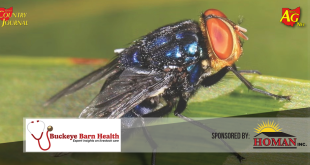
In June 2026, New World screwworm (NWS) was detected in Texas. At the time of writing, there have been more than 30 reported cases of NWS in livestock and pets across Texas and New Mexico. NWS is a parasitic fly that affects warm-blooded animals when the larvae (maggots) burrow into tissue and feed on living flesh, causing large and painful wounds. While animals may become infested with NWS, full recovery with proper treatment is possible. Once animals have recovered, they can reenter the production cycle and their products are safe for consumption. Although NWS is a threat to livestock health and security, it does not impact food safety.
It may seem frightening, but NWS was historically found across the Americas. It was eradicated from the United States in the 1960s. Through international collaborative efforts between the United States and Central American countries, NWS was progressively pushed further south until the 1990s, when the Darien Gap in Panama was established as the barrier between NWS-free and NWS-infested regions.… Continue reading
Read More » July 12, 2026 Buckeye Barn Health, Livestock, Top Headlines
By Kevin Jacque, DVM, PAS, Ohio State University
Summer is here, and so is that classic Midwest heat and humidity. This month, we will discuss ventilation and how to keep barns well-ventilated. This was requested by a reader, and I happily agreed. Ventilation is an important component of our animals’ summer (and year-round) health.
Firstly, we should distinguish between ventilation and cooling. Ventilation is the exchange of air within a space to bring in new, fresh air – usually from outside of a building. Cooling is the reduction of air temperature or body temperature through various means, such as wind speed, humidity reduction, and conditioning. We cannot always address ventilation by the same means as cooling and vice versa. Ventilation is still important in the winter (sometimes more important due to the nature of our animal housing) and is imperative to animal and human health. We must remove old air. “Old air” will be stale in nature – it contains pollutants like bacteria, dust, allergens, ammonia, carbon dioxide, carbon monoxide, VOCs, POCs, and small air particulates.… Continue reading
Read More » June 10, 2026 Buckeye Barn Health, Livestock, Top Headlines

By Shaun Wellert, DVM MS DACVPM
“An ounce of prevention is worth a pound of cure.” “Measure twice, cut once.” “Failing to prepare is preparing to fail.” The English language is full of well-worn clichés that drive home the importance of preparation. The fact that we have so many of these sayings underscores a simple truth: humans are naturally reactive, and we wait for problems to arise before we act. Unfortunately, this mindset often carries over into how we manage animal health, usually focusing on treatment rather than prevention. That can be a costly mistake. Many of the most common and challenging health issues in agriculture occur early in an animal’s life or during times of significant stress, such as calving, pen moves, or long-distance transport. These are not times to improvise; rather, they’re moments that demand planning.
Vaccination is one of the easiest and cheapest ways to decrease diseases in your animals.… Continue reading
Read More » May 3, 2026 Buckeye Barn Health, Livestock, Top Headlines
By Emily Nogay, VMD, MS, Ohio State University
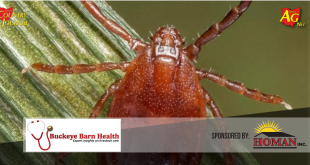
We made it! The sun is shining, the birds are chirping, the flowers are blooming, and the Ohio temperatures are climbing. If you’re anything like me, then your skin loves the sun and the warmth it brings. Unfortunately, that also brings out those creepy eight-legged crawlies called ticks. These blood-sucking little monsters have already started to come out of the brush and become pests for humans, dogs, cats, wildlife, and our livestock species.
Ticks are ectoparasites (a parasite that lives on the skin) which have four different life stages – egg, larva, nymph, and the adult. Once hatched from the egg, the tick needs a bloodmeal in order to move to the next stage. Different tick species have different host preferences, but each life stage can also have different host preferences. With these bloodmeals, ticks can pick up an infectious agent in that blood and harbor it within their bodies to then later infect a new host when the tick feeds again, making the tick a vector for the disease.… Continue reading
Read More » April 8, 2026 Buckeye Barn Health, Livestock, Top Headlines
By Kevin J. Jacque, DVM, PAS – Clinical Assistant Professor, OSU Large Animal Services at Marysville
In 2021, the FDA provided a guidance document and timeline for the removal of medically important antimicrobial products from over-the-counter status to prescription status (OTC to Rx). This guidance was titled GFI 263, “Recommendations for Sponsors of Medically Important Antimicrobial Drugs Approved for Use in Animals to Voluntarily Bring Under Veterinary Oversight All Products That Continue to be Available Over-the-Counter Guidance for Industry.” This governmental issue was officially started in practice in June 2023 which allowed for the removal of products like penicillin, oxytetracycline, sulfa antibiotics, tylosin, lincomycin, and mastitis intramammary tubes. Most of you may remember not being able to buy Penicillin or LA200 at the farm store after a while (once current stocks were depleted from inventory). This may have caused some stress to farm animal owners, but many notices were sent.… Continue reading
Read More » March 12, 2026 Buckeye Barn Health, Livestock, Top Headlines
By Shaun Wellert, DVM, assistant professor Ohio State ATI
When I teach students about infectious diseases, I often use a model known as the infectious disease triad. This framework illustrates that disease occurs only when three essential factors are present simultaneously: a susceptible host, a pathogen, and a conducive environment. The host is the animal that becomes ill; the pathogen is the disease-causing organism; and the environment is the surrounding conditions that allow the pathogen to infect and multiply.
For example, if one of my calves develops respiratory disease, the host is the calf itself. The pathogen may be a virus such as bovine respiratory syncytial virus (BRSV). The environment includes pen or housing conditions, such as ventilation, stocking density, moisture, and temperature, that influence the development of disease. Illness occurs only when all three components intersect.
When we shift from understanding disease to preventing it, the same framework applies. The infectious disease triad can be thought of as a three-legged stool.… Continue reading
Read More » February 11, 2026 Buckeye Barn Health, Livestock, Top Headlines

By Emily Nogay, VMD, MS, OSU Large Animal Services
There isn’t a veterinarian out there who enjoys seeing a suspected blocked small ruminant on their schedule. Being “blocked” refers to when stones or crystals are created in the bladder and subsequently obstruct the outflow of urine out of the urethra. This is called urolithiasis, and it is similar to kidney stones in humans, except that sheep and goats tend to form stones in the bladder rather than the kidneys. This disease is difficult to treat and even more difficult to prevent, making it frustrating for both veterinarians and owners.
Small ruminant urolithiasis is a multifactorial disease, meaning it results from many factors (which can make prevention difficult). There are many different types of urinary stones; however, sheep and goats typically create two types: calcium carbonate and struvite stones. Struvite stones are part of a larger group called phosphatic stones; however, because phosphatic stones are difficult to distinguish from one another without laboratory testing, they are often lumped together and collectively referred to as struvite.… Continue reading
Read More » January 11, 2026 Buckeye Barn Health, Livestock, Top Headlines
By Kevin J. Jacque, DVM, PAS
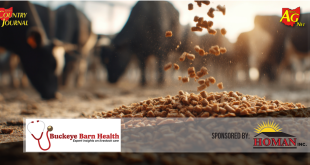
One can walk into a feed or farm store and be quite overwhelmed by the number of supplements and feed options for their farm animals. Many have catchy names, flashy labels, or marketing for “show” or “high value” animals. We will intend to discuss some of those supplements – prebiotics, probiotics, and postbiotics – their uses and dissemination within farm animal health.
First, let us define the terms. Prebiotics are compounds in feeds and forages that help to feed the microorganisms of the gastrointestinal tract. Let us call these products those that “feed the bugs.” Some common examples are fiber (especially in ruminants), inulin, lactulose, fructo-oligosaccharides (FOS), galacto-oligosaccharides (GOS), and others. Most of these compounds are used by the gut microorganisms to ferment into usable compounds or metabolic processes that benefit the cells of the gastrointestinal tract.
In cattle, sheep, goats, alpacas, llamas, deer, and similar ruminants, fermentation occurs in the foregut (rumen, C1, or pseudorumen).… Continue reading
Read More » December 10, 2025 Buckeye Barn Health, Livestock, Top Headlines
By Michelle Arnold, DVM, Ruminant Extension Veterinarian, University of Kentucky Veterinary Diagnostic Lab
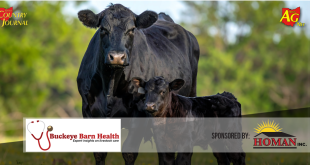
The top ten New Year’s resolutions, first published in January 2022, serve as a good reminder of the management practices that almost always need fine-tuning in cow/calf operations. As winter gives way to spring, try to incorporate one or more of the following resolutions, updated for 2026.
In 2026, I resolve to:
1. Improve the water the cattle drink: Water is exceptionally important, relatively inexpensive and readily available, but it is often the most ignored nutrient. Water consumption varies depending on age, breed, stage of pregnancy or lactation, and outdoor temperature and humidity, but it can reach as high as 25 to 30 gallons per day during hot weather. Water-related health problems are seldom due to what is in the water, but rather the decrease in water intake because of poor quality, bad taste and offensive odor. When cattle do not drink enough, feed intake and milk production drop, heat stress worsens and overall immunity suffers.… Continue reading
Read More » November 6, 2025 Buckeye Barn Health, Livestock, Top Headlines
By Emily Nogay, VMD, MS
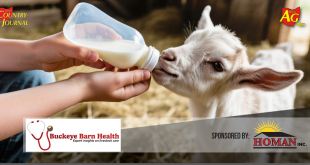
Raising babies is no joke. Whether that be human or animal, it can be exhausting, scary, and overwhelming. To make matters even worse, those first few months of life are incredibly important for setting them up for success later in life. Small ruminants are no different, and finding the correct information on how to successfully raise them can be difficult. Don’t forget that there may be information out there, but that doesn’t make it good information. Always be sure to consult your veterinarian to further understand what works and what doesn’t for your situation.
In the first few days of life, kids and lambs should be given colostrum directly from the dam. This is the first milk from the dam, which appears more golden in color and thicker than regular milk. Colostrum carries important antibodies, micronutrients, and active enzymes from the dam and transfers them to the kid or lamb, who can absorb those antibodies within the first 24 hours of life.… Continue reading
Read More » October 6, 2025 Buckeye Barn Health, Livestock, Top Headlines
By Kevin J. Jacque, DVM, PAS
A producer called me around 6 am and noted he had lost a cow overnight. Seeing that this producer was an excellent client, I left my house earlier than normal before a dairy herd check to necropsy (think autopsy) his cow. We discovered several loops of middle intestine with hemorrhagic wall and contents. I noted the signs were consistent with hemorrhagic bowel syndrome, sometimes called jejunal hemorrhagic syndrome. The producer said, “What did I do wrong? What do I do now?” That led me into a common conversation I have had with clients about the inner workings of their animals’ intestines, the value of good feed, and the reliability of a consistent feeding and management protocol.
You are probably wondering why I would start an article in such a way. Here in lies the answer – the gut is not all what you have forethought.… Continue reading
Read More » September 3, 2025 Buckeye Barn Health, Livestock, Top Headlines
By Shaun Wellert, DVM MS DACVPM
In 2017, as I was preparing for the board exam for the College of Veterinary Preventive Medicine, I spent long days buried in textbooks and long evenings in small-group discussions about hypothetical disease outbreaks. These tabletop scenarios covered everything from foot-and-mouth disease to zoonotic threats, and one in particular still sticks with me: a SARS-like coronavirus spreading rapidly across the globe. Our group debated control measures, tracing the possible path of infection, and brainstorming how to slow it. We quickly ran into a grim reality: limiting human movement enough to meaningfully contain such a disease would be extremely difficult. Our best hope, we concluded, would be the rapid development of an effective vaccine.
At the time, it was just an exercise, but within a few short years, that “what if” became a “right now,” as COVID-19 unfolded in real life and tested the world’s ability to respond. … Continue reading
Read More » August 10, 2025 Buckeye Barn Health, Livestock, Top Headlines
By Emily Nogay, DVM
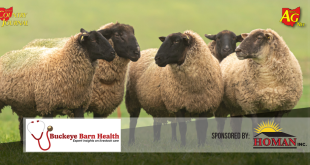
Skinny goat? Worms. Diarrhea? Worms. Pale eyelids? Worms. Gastrointestinal parasites often take the blame for any small ruminant that is looking ill. Many times, they are responsible; however, it is important to remember that parasites are a natural part of life, especially for animals that eat off the ground.
Although sheep and goats are susceptible to many types of gastrointestinal parasites, there is one that takes the cake – the barber pole worm or Haemonchus contortus. This worm lives inside the true stomach (abomasum) and attaches to the stomach lining to feed on the blood of the animal. This worm is common in all sheep and goats, and unfortunately, it is nearly impossible to eliminate. Large enough worm burdens can cause weight loss, diarrhea, anemia, localized edema (also known as “bottle jaw”), and subsequent death. Animals become infected when female worms pass eggs in the stomach, which are then deposited through manure onto pasture.… Continue reading
Read More » July 8, 2025 Buckeye Barn Health, Livestock, Top Headlines
By Kevin J. Jacque, DVM, PAS
We can all appreciate that life runs a little differently than it did 10, 20, or 50 years ago. Our farms are more technologically live, data-driven, and managed by highly trained people. As a country, we produce more animal products and use fewer resources. We have become more efficient, but we also have become more separated – socially and by farm animal species. The ever-changing global economy, the influencer status of social media, and consumer influence pose challenges to determining what is best for our animal operations. As a veterinarian, I try to negotiate and guide clients through these challenges but also recommend what data, research, and experience dictate best for the situation.
I often hear from clients, what should I vaccinate with? My response is usually, “That’s a loaded question.” Perhaps we would all like that older advertisement situation and just hit the “easy button,” but it’s not quite as simple as that.… Continue reading
Read More » Ohio Ag Net | Ohio's Country Journal Ohio Ag Net | Ohio's Country Journal