The first stop of the 2026 Fendt Harvest Tour was in Fairfield County and the Ohio Ag Net’s Ty Higgins was there to learn more about the new Fendt Ideal combine and the PTx OutRun automated grain cart. The Cab Cam series is brought to you by Precision Agri Services.… Continue reading
By Dusty Sonnenberg, Field Leader, a project of the Ohio Soybean Council and Soybean Checkoff
On this episode of the podcast, the Field Leader Roadshow traveled to Allen County to the farm of Matt Burkholder. Dusty visits with Matt about the 2026 growing season and his journey in soil health and cover crops. They also talk about The Nature Conservancy’s Farmer Advocates for Conservation program and the new OHFarm program.
As fall migration gets underway, USDA is urging livestock and poultry producers to remain vigilant against Highly Pathogenic Avian Influenza (HPAI). In this featured audio, USDA Undersecretary Dudley Hoskins discusses the increased risk posed by migrating wild birds, the role of the national milk testing program in monitoring dairy cattle, and the continued importance of biosecurity. Hoskins explains how the testing program serves as an early warning system and reassures consumers that pasteurized dairy products remain safe. He also encourages producers to review their biosecurity practices and take advantage of USDA resources available to help protect their operations.
By Josie Jennings, a member of the Global Impact FFA Chapter, the 2024-2025 Ohio FFA State Vice President At Large and 2026 national officer candidate
Each year, over 70,000 FFA members from across the country, Puerto Rico, and the Virgin Islands excitedly make their way to the heart of Indiana. Since seventh grade, my October plans have looked just the same: framed by the glow of Lucas Oil Stadium and fueled by friendships, new and old, that National FFA Convention brings.
As the end of October drew closer, I’d pack my bags once again: dress heels, overnight essentials, a full wallet for the Shop FFA Mega Store, and, of course, my slightly salty-smelling, worn-in, well-loved blue corduroy FFA jacket. I’d embark on the same journey from Springfield, Ohio, overcoming the I-70 construction that eventually led me to a hotel nestled in the concrete jungle of Indianapolis.
Soon, I’ll be returning to the National FFA Convention again.… Continue reading
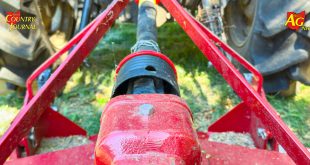
The trouble started when an Ohio dairy farm removed the PTO shaft safety guards on the sand spreader. And failed to replace them. This piece of equipment distributes sand, which is used for bedding on many dairy farms.
The sand spreader was connected to a tractor by the PTO shaft, which was equipped with a hydraulic motor that caused the PTO shaft to rotate while in use. To protect the user and bystanders from the hazard, the PTO shaft was supposed to have safety guards on it. On April, 22, 2019, the sand spreader did not have any safety guards.
On that day, a farm employee observed an oil leak in the sand spreader. He turned the sand spreader off to find the source of the leak, but when he couldn’t identify it, he turned the spreader back on to investigate further. While looking for the leak, a piece of clothing on his left leg got caught in the unguarded, rotating PTO shaft.… Continue reading
For Week #11 of Feeding Farmers, Clark Farms in Morrow County welcomed the Ohio Ag Net’s Ty Higgins for lunch. Nate, Jessie and their teenage sons are on the farm. Nate farms approximately 1,500 acres of tillable ground, raising corn, soybeans, and wheat, all while maintaining a strong commitment to quality and stewardship of the land. In addition to his crops, he also feeds out beef cattle. In addition to running his own operation, Nate is also a seed salesman, helping other local farmers succeed.
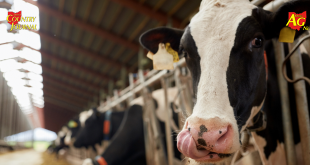
A new national dairy checkoff campaign is giving consumers a closer look at the people, technology and decisions behind modern dairy farming, and an Ohio farm is among those featured.
Dairy Management Inc. launched Portraits of Modern Dairy on Oct. 12, with stories, photography, and video highlighting seven women on six dairy farms. The initiative aims to show consumers what dairy farming looks like today, from animal care and business decisions to technology, conservation, and family life on the farm.
The launch coincided with National Farmers Day and the United Nations’ International Year of the Woman Farmer, beginning with a segment on Good Morning America. DMI also created a dedicated online experience with farmer profiles and video, and is making a collection of campaign photos available for public use.
One of the featured farmers is Meagan Hempfling of Hemsteads Holsteins near Delphos, Ohio. Hempfling is the sixth generation of her family to farm the operation, which dates back to 1862.… Continue reading
The U.S. Department of Agriculture (USDA) recently announced that dairy producers can now enroll for 2027 Dairy Margin Coverage (DMC), a voluntary risk management program that was recently strengthened by the Working Families Tax Cuts Act with greater risk protection for dairy producers. DMC enrollment for 2027 starts Oct. 5 and runs through Dec. 18, 2026.
“Putting farmers first means making sure dairy producers have practical tools to protect their operations when markets fluctuate,” said FSA Administrator Bill Beam. “Dairy Margin Coverage provides an affordable layer of protection when margins tighten, helping producers manage risk and keep their operations on solid ground.”
DMC provides financial protection when the difference between the national all-milk price and average feed cost falls below a producer-selected coverage level.
The Working Families Tax Cut Act reauthorized DMC through 2031 and strengthened the program to provide dairy producers with greater risk protection. These improvements took effect beginning with the 2026 program year and expanded the amount of production eligible for Tier 1 protection from five to six million pounds, updated production histories to better reflect current dairy operations, and provided producers with an opportunity to secure coverage through 2031 at a 25% reduced premium cost. … Continue reading
The Ohio Soybean Association is proud to announce Nathan Brown of Highland County as its first-ever Conservation Award recipient, recognizing his outstanding commitment to protecting Ohio’s natural resources while building a sustainable operation for future generations.
Brown, a first-generation farmer, began his operation in 2002 with just 25 acres. Today, he farms 1,400 acres of soybeans and corn in Highland County. Brown credits the farmers and mentors who helped shape his approach to agriculture, including longtime conservation-minded mentor Ed Winkle, who introduced him to cover crops. The Browns began experimenting with cereal rye on 20 acres in 2012. After seeing a five-bushel-per-acre soybean yield increase the following year, Brown became increasingly interested in the connection between soil health, productivity and conservation.
“Not growing up in a farming family and being blessed with the opportunities that our family has is not something we take lightly,” Brown said. “We realize how much of a privilege it is to be a steward of this land.… Continue reading
After a stretch of wet weather across much of Ohio, farmers saw a limited window for fieldwork last week. While crop conditions remain strong, harvest progress for both corn and soybeans continues to trail historical averages as many growers work around challenging field conditions. USDA reports there were 5.6 days suitable for fieldwork during the week ending Oct. 11.
Mature corn for the state is sitting at 68%, above last week’s 53% but below the 82% average. Corn harvested is sitting at 11%, below the 22% average. Ohio corn condition was rated 69% good to excellent, with 56% good and 13% excellent.
Soybeans dropping leaves have reached 77%, ahead of last week’s 65% but behind the 94% five-year average. Soybeans that have been harvested are at 30% below the 40% average. Ohio soybean condition was rated 73% good to excellent, with 60% good and 13% excellent.
Winter wheat planted is at 17%, ahead of last week’s 2%, but behind the five-year average of 43%.… Continue reading
As harvest gets underway, extra steps should be taken in fields affected by Gibberella ear rot (GER) to minimize vomitoxin contamination and maintain grain quality. Vomitoxin, or deoxynivalenol (DON), is a mycotoxin produced by the fungus Fusarium graminearum that causes Gibberella ear and stalk rot of corn, as well as Fusarium head blight of wheat and damping off in soybeans. At certain levels, grain contaminated with vomitoxin can cause feed refusal and health issues in livestock. For this reason, vomitoxin can drastically reduce the value of your corn, as affected grain is discounted in price or rejected altogether.
Once vomitoxin is present in grain, it cannot be removed, making timely scouting, harvest management, and proper grain storage essential to protecting your bottom line. The first step is scouting fields before harvest. Corn ears affected by GER often have pink-to-reddish mold beginning at the ear tip.… Continue reading
By Dusty Sonnenberg, CCA, Field Leader, a project of the Ohio Soybean Council and Soybean Check-off
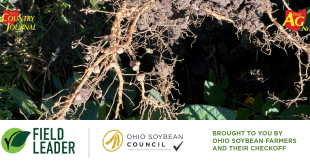
October is SCN Action Month. During the entire month of October attention is directed toward the number one yield robber of soybeans nationwide. It is a problem that costs soybean growers millions of dollars annually. Because of the way it affects the plant, many growers never know they have a problem until it is too late. Dale Ireland is a technical product lead with Syngenta and says that SCN is easy to overlook.
“This is a pest that’s not going to go away. I am glad that we dedicate October to thinking about because if we do not make folks think about soybean cyst nematode, it is easy to forget about this pest,” said Ireland. “If you use the example of theft, and that is what a parasitic nematode like soybean cyst nematode does, think about soybean cyst more of an embezzler than blowing up the safe kind of a pest.… Continue reading
Farm Credit Mid-America has released the second edition of its Farm Fun Agritourism Directory, showcasing destinations across the region that connect visitors with agriculture through experiences like pumpkin patches, corn mazes, orchards, farm markets, wineries, and educational tours. Ohio Ag Net’s Allison Kinney visits with Mary Fannin, senior financial officer with Farm Credit Mid-America, who explains how agritourism helps farm families diversify income, strengthen business resilience, and create new opportunities for future generations. She also highlights some of the unique experiences featured in the guide and shares how families can use the directory to discover new agricultural adventures.
“I can’t get a vet out” is a line I have heard more and more whether straight from the “horse’s mouth” or through social media. I’ve also heard, “They don’t want to come,” or my “vet doesn’t care about me anymore.” What a different world we live in compared to 20, 30, or 40 years ago. We may ruffle some feathers or bolt out some wool with this topic, but it should be discussed out in the open. We will not discuss animal health as much in this article as human relationships: the forgotten side of farm animal production.
What does providing farm animal veterinary care look like these days? In Ohio, most veterinarians who see farm animals are “mixed-animal practitioners.” They spend part of their week running farm calls and the rest wrangling stray cats or treating ear infections, while juggling dental surgery and a potential pyometra dog emergency that just called in.… Continue reading
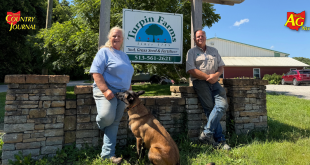
Just nine miles from downtown Cincinnati, Turpin Farms stands as a reminder that agriculture can thrive even amid the pressures of urban growth. Surrounded by development and nestled within Interstate 275, the family operation is the second-oldest continuously held farm here in Ohio.
The farm has evolved from traditional grain farming into one of the region’s premier turfgrass producers, all while maintaining a commitment to stewardship, innovation and family values.
“Here at Turpin Farms, we grow custom turf, soybeans, and corn,” said Pam Simmons, 11th-generation co-owner/operator of Turpin Farms. “We’ve been here since 1785. The farm was given to us as a land grant for fighting in the Revolutionary War, so our original deed is signed by President John Adams.”
Today, the farm primarily focuses on sod production, a business that was born out of a desire for greater independence in the marketplace.… Continue reading
The Farm Service Agency’s Agriculture Risk Coverage (ARC) and Price Loss Coverage (PLC) will generate approximately $13.8 billion in gross payments to eligible agricultural producers for the 2025 crop year; the largest annual payout by far since these key safety net programs were established in the 2014 Farm Bill.
“President Trump has been the biggest champion for American farmers, and today’s announcement delivers nearly $14 billion in funding for rural America,” said Secretary of Agriculture Brooke L. Rollins. “This historic economic support provides producers critical liquidity to cover operating costs, prepare for the next crop year and invest in their operations.”
The 2025 crop year stands alone in the history of ARC and PLC since Congress created the programs as key components of the commodity safety net in the Agricultural Act of 2014. Since 2015, no previous crop year has generated payments approaching this level. While ARC and PLC payments total $13.8 billion, producers are reminded that this does not account for payment limitation reductions and the 5.7% sequestration rate required by statute that will be applied to all ARC and PLC payments.… Continue reading
It’s tempting to skip soil testing when budgets are tight but, according to Reid Abbott, an agronomist with AgroLiquid, soil tests are one of the highest-return investments a grower can make heading into the fall. In this Featured Audio, find out why fall soil testing is such an important investment for growers heading into the 2027 growing season.
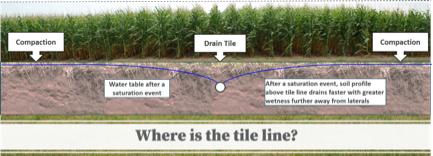
Many Ohio farmers are familiar with the pattern in subsurface-drained fields: corn growing directly above tile lines often appears taller and healthier than corn growing between laterals. As spring rainfall events intensify and suitable fieldwork windows shorten, some producers are responding by installing tile systems with spacings as narrow as 15 to 20 feet. But is narrower always better?
Drainage spacing recommendations have traditionally been based on crop susceptibility, soil texture, and soil permeability. Yet interest in narrower spacings is growing across northwest Ohio, even in fields originally tiled to recommended designs. Although research on very narrow spacing systems remains limited, several important considerations can help producers evaluate whether narrow spacing is likely to provide a return on investment.
Figure 2 Corn growth differences observed in OSU’s long-term drainage plots (50-ft. drain spacing). Plants growing directly above tile lines often exhibit greater growth than those located farther from the drain laterals.
Weather continues to be a factor for this growing season across the Midwest. The western cornbelt has seen adverse weather for weeks which has led to reduced corn yields, especially in Nebraska. Illinois has seen corn quality with sprout damage often as a reality.
Bottom line, corn harvest is simply not taking place in Ohio and other states. Producers are stepping on the gas pedal in a fever pitch to get soybeans harvested as quickly as possible before the next rain event takes place. Dry conditions have soybean dust flying everywhere. Ohio producers vividly remember last year when persistent rain delayed soybean harvest. Damage levels spiked above 20% in numerous Ohio counties. No one wants to relive that nightmare this harvest season.
After the report was released Friday, corn was down 18 cents, soybeans down 4 cents, and wheat down 10 cents. Prior to the noon report, corn was up 3 cents, soybeans up 7 cents, and wheat up 1 cent. … Continue reading
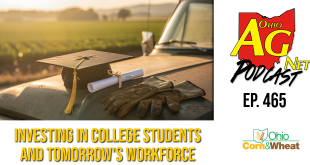
Later this week, the Ohio Ag Net, Ohio’s Country Journal and Ohio Soybean Council will kick off a series of events that are developed to help college students better prepare for a career in Ohio agriculture. Learn more about Wilmington College’s Night for Young Professionals and Ohio State’s Planting Professionals events.
Plus, agritourism has become a popular way for farm families to diversify their businesses, create new sources of income and connect consumers directly with agriculture and there a new resource from Ohio Farm Bureau to help those families navigate the laws, regulations and risk considerations of agritourism. Learn more about it on this Ohio Ag Net Podcast, powered by Ohio Corn and Wheat.
 Ohio Ag Net | Ohio's Country Journal Ohio Ag Net | Ohio's Country Journal