Registration is open through March 10 for Shawnee State Park’s 4th Annual Nature Wellness Weekend, set for Friday, May 8, through Sunday, May 10. Co-sponsored by the Ohio Division of Parks and Watercraft, Shawnee State Park Lodge & Conference Center, and Friends of Shawnee State Park, Inc., the weekend blends outdoor activities with wellness-focused programming.
Participants may choose from a variety of sessions, including creek exploration, natural art, nature writing, identifying wild edible plants, and more. Evenings offer time to unwind with live music by Ohio singer and songwriter, Megan Bee, around the campfire.
Participants may select an all-inclusive lodge package at the Shawnee Lodge and Conference Center, which includes lodging, meals, and activities. Prices range from $490 to $560 per person, depending on whether participants share a room. Those who prefer a more rustic experience may register for $75, plus camping fees, and reserve a site at the Ohio River or Turkey Creek Campgrounds through reserveohio.com… Continue reading
Robert Mullen, vice president of agricultural technology with Heritage Cooperative, joins Ohio’s Country Journal editor Brianna Smith to discuss the importance of sulfur when it comes to growing crops. They discuss how sulfur levels have changed over the years and ways to supplement the macronutrient.… Continue reading
By Dusty Sonnenberg, CCA, Field Leader, a project of the Ohio Soybean Council and Soybean Check-off
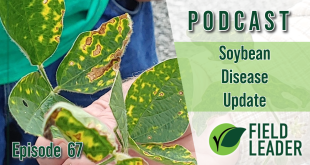
From Red Crown Rot to Brown Stem Rot to Sudden Death Syndrome, Ohio soybean farmers have their work cut out for them as they scout fields and try to identify the diseases that are stressing their crops. Dr. Horacio Lopez-Nicora, OSU Extension Soybean Pathologist and Nematologist, visits with Dusty Sonnenberg to review the 2025 growing season and Ohio’s first positive identification of Red Crown Rot. Dr. Lopez-Nicora shares the environmental conditions that favor disease, and the plant and leaf symptoms soybean growers should watch for in 2026. They also discuss the research being conducted by OSU Extension on these diseases, thanks to financial support from the Ohio Soybean Council and the Soybean Check-off.
In the current unpredictable economy, producers are facing challenging decisions, prompting many to look past traditional revenue sources.
“I think that it’s really important to consider other funding opportunities and the economic times that we’re in,” said Hannah DiVencenzo, founder and principal consultant at AgriBridge Consulting.
Funding programs have become a critical tool. Many grant programs are well known, but the path to applying for one is not always straightforward. The complexity of the process is often a deterrent for applicants, leaving many funding opportunities unclaimed every year, particularly for value-added projects.
“There are a lot of products that USDA and FSA have that are beyond the scope of a single producer,” said DiVencenzo. “And so, what’s nice about value-added is it really takes and stretches the imagination of our producers into, well, what can I do beyond what I’m already doing and how do I get there?”… Continue reading
For those following soybeans and corn in South America, the most important read right now is not just the size of the crop, but the speed at which that crop turns into available supply, shipments, and cash flow. Aggregate volume remains large, but the market has entered a phase in which weather, agronomic planting windows, quality, logistics, and geopolitics are driving price and margins much more forcefully in the short term. That is why volatility remains high even in a robust production environment: the focus has shifted away from “how much” and toward “how” and “when.”
In Brazil, official figures continue to confirm a large cycle. In CONAB’s fifth survey, total grain production was estimated at 353.4 million metric tons. Within that total, soybeans are projected at 177.985 million metric tons, and total corn at 138.448 million metric tons, with year-over-year recovery and a meaningful contribution from the second crop to the final outcome.… Continue reading
Join top farmers and CCAs at the 2026 Conservation Tillage and Technology Conference, March 10-11 at Ohio Northern University (525 S Main Street, Ada, Ohio). Connect with peers, discover new ideas, and boost your farm’s profitability.
You won’t want to miss our keynote speaker, Monte Bottens. Monte is a fifth-generation farmer, the host of the AgEmerge Podcast, and a regenerative ag tech investor. Bottens Family Farm practices long-term no-till and cover crop systems and integrates livestock across 2,800 acres near Cambridge, Illinois. He raises non-GMO, food-grade corn and soybeans, along with small grains, specialty crops, hay, and grazing crops. His father, Bob, manages many day-to-day operations. Robyn and Monte Bottens own and operate Grateful Graze, a direct-to-consumer, pasture-raised beef, chicken, pork, and eggs business. Monte is being sponsored by Calmer Corn Heads. Other major sponsors of this year’s CTTC include Brandt.
The Agronomic Crop Management sessions will take place on both Tuesday and Wednesday.… Continue reading
At the Commodity Classic Convention in San Antonio, Texas, U.S. Secretary of Agriculture Brooke L. Rollins announced a new USDA data modernization effort called “One Farmer, One File.” The initiative is intended to create a single, streamlined record for farmers that can be used across multiple USDA programs.
According to the U.S. Department of Agriculture, the system is designed to allow producer information to move with them across agencies rather than requiring repeated submissions.
“Every single day at USDA, our focus is on making life easier, more profitable and more rewarding for the American farmer,” Rollins said. She added that the project is intended to modernize existing systems and improve customer service for producers working with USDA programs.
USDA’s Farm Service Agency (FSA), Natural Resources Conservation Service (NRCS), and Risk Management Agency (RMA) administer a variety of programs for agricultural producers, including farm number registration, acreage reporting, access to financing, and disaster assistance.… Continue reading
By March, most Ohio gardeners are eager for spring. Gardening may still be months away, but starting seeds indoors brings an early taste of the season.
Carri Jagger, Ohio State Extension agriculture and natural resources educator, said seed starting can be as simple or advanced as a gardener chooses.
“A lot of folks go to the greenhouse or the garden center, and they buy their vegetable plants or their flowers, and that’s perfectly fine,” Jagger said. “But some people like that challenge of starting their own seeds.”
Beginners don’t need expensive supplies for seed starting, just a few basics and attention to crop needs.
Choosing your seed
The first step in seed starting is, obviously, choosing your seed.
“One of the benefits of starting your own seeds is you can pick varieties that you like or that they might not carry at the garden center,” Jagger said.
That opens the door to unique tomatoes, specialty peppers, uncommon herbs, and flowers with rare colors or traits.… Continue reading
Growth Energy, the nation’s largest biofuel trade association, expressed renewed urgency after Congress missed another deadline to approve a permanent, legislative fix offering consumers year-round access to E15. Ohio Ag Net’s Dusty Sonnenberg caught up with Growth Energy CEO for an update at Commodity Classic in San Antonio, Texas.… Continue reading
In recognition of the importance of agriculture to the state, Ohio Governor Mike DeWine and Lt. Governor Jim Tressel issued a proclamation declaring March as Ohio Agriculture Month.
The statewide celebration, led by the Ohio Department of Agriculture (ODA), is meant to recognize the farmers, agribusinesses, and food producers who power Ohio’s economy and feed communities at home and around the world.
“As we begin Ohio Agriculture Month, we’re proud to showcase our 74,000 farms and the people who work hard every day to keep our agriculture industry strong,” said Governor DeWine. “Ohio farmers feed our families, power our economy, and strengthen our communities, and we thank them for their dedication to serving Ohioans every day.”
“From families that have passed down farms for generations to the young people preparing to lead the next chapter of food innovation in our state, agriculture is foundational to Ohio’s strength and history,” said Lt.… Continue reading
Commodity Classic, the largest farmer-led, farmer-focused agricultural convention and trade show, was held in San Antonio, Texas in late February. The Ohio Ag Net’s Ty Higgins, Dusty Sonnenberg and Joe Everett were there to cover the major topics and challenges facing farmers today and had the opportunity to visit with leaders of Ohio Corn and Wheat, Ohio Soybean Association and Ohio Small Grains Council.
On this Ohio Ag Net Podcast, powered by Ohio Corn and Wheat, hear from Tadd Nicholson, the Executive Director of Ohio Corn and Wheat, Jerry Bambauer, President of the Ohio Soybean Council, as well as Owen Niese with the Ohio Small Grains Council as they discuss the policies that were address at this year’s Commodity Classic that will impact farmers in 2026 and beyond.
Gregg Fogle, manager of the Ohio State ATI Small Ruminant Research Center, gives Ohio Ag Net and Ohio’s Country Journal a look at the operation and how they support students interested in learning about their animals.
By Mike Zuzolo, Global Commodity Analytics & Consulting LLC
As I continue to await a major crude oil and wheat low — which I view as a potential signal of a broader low in the commodity sector — price action heading into the March Agricultural Outlook Forum has been driven more by trade policy and U.S. supply-demand fundamentals than by global supply and demand.
Since last month, tensions between the United States and Iran have increased. That has helped WTI crude show signs of a potential price low. SRW wheat is also beginning to respond, aided by warm, dry weather in the HRW wheat belt. However, in my view, neither market has technically “broken out” yet.
At the same time, uncertainty remains around U.S. trade policy. The Supreme Court still has not ruled on the validity of President Trump’s tariff policy (as of the time of this writing). As a result, trade attention has shifted back toward policy headlines heading into the February WASDE report.… Continue reading
Leaders from Ohio’s soybean and corn organizations said policy conversations remained front and center as farmers gathered at the 2026 Commodity Classic in San Antonio this past week.
The Ohio Soybean Association President Bennett Musselman said soybean delegates spent time during their caucus discussing several priorities impacting growers across the country.
“There were several conversations about labor. H-2A was an issue that we discussed quite a bit,” Musselman said. “We also talked crop insurance and some changes that we would like to see to the federal crop insurance policy that more closely aligns with how we grow soybeans now with earlier plant dates. RMA has changed some of those in the past, but not for every state, so that was a big topic of discussion.”
Trade was another important topic, as well as uses for soybeans such as biomanufacturing and biofuels. Musselman added that while production practices vary widely across the country, soybean farmers share the same goal when working through policy discussions.… Continue reading
The Nature Conservancy in Ohio and Earth Economics released the report “H2Ohio and the Value of Restoring Watersheds,” showing that the state’s water quality program for wetlands and agriculture generated more than $330 million in statewide economic benefits in 2024.
“The work that H2Ohio has funded represents a commitment to the health of people and nature in Ohio. We are excited to be able to share its economic value as well,” said Alexis McCarter, natural infrastructure director for The Nature Conservancy in Ohio.
Using a variety of methodologies reviewing statewide data for 2024, the report demonstrates the measurable benefits to Ohio’s residents, economy and environment from the H2Ohio program. The report quantifies various impacts down to the dollar in locations throughout the Buckeye State, indexed by county in the appendix, and shows that in 2024, H2Ohio generated more than $330 million in economic benefits, hundreds of jobs, and additional tax revenue to cities, counties, and the state.… Continue reading
As National FFA Weeks wraps up, Ohio Ag Net’s Joel Penhorwood looks back on the week as well as support opportunities ahead with Ohio FFA Foundation Executive Director Amy Jo Baughman.… Continue reading
After several challenging years, Ohio pork industry leaders say 2025 marked major progress at the state and national levels, renewing optimism for 2026.
At the Ohio Pork Congress in Lima, Ohio, Feb. 3-4, industry leaders celebrated key successes during the past year. From legislative victories to increased funding for veterinary workforce development and foreign animal disease preparedness, Ohio Pork leaders said they entered 2025 with a plan.
“We were very proactive in our strategy,” said Cheryl Day, executive vice president of the Ohio Pork Council (OPC). “We had some really big priorities in the budget that we actually were successful in getting passed through there.”
Cheryl Day presents on checkoff funded programs at the 2026 Ohio Pork Congress.
Day said one of the year’s most important accomplishments was a legislative clarification related to feral swine. Another key highlight, Day said, centered on animal health and long-term protection for the state’s livestock industries.… Continue reading
Young people interested in the cattle industry are finding new opportunities to learn, connect and grow through the Ohio Beef Youth Council.
The organization, open to youth ages 8 to 22, brings together individuals from across the state who share an interest in the beef industry, whether they raise cattle or simply want to learn more about it.
“The goal with this organization is to bring anybody that’s interested in the beef industry, no matter if you raise cattle, own cattle, or even eat cattle, they want you to come together to learn about the beef industry and all aspects of it,” said Ryan Bowsher, chair of the Ohio Beef Youth Council.
Through the council’s Stockmanship Program, youth have the chance to participate in a variety of contests designed to build industry knowledge, confidence and leadership skills. The program is supported by AgCredit along with the Ohio Cattlemen’s Association and the Ohio Beef Council.… Continue reading
The USDA’s Agricultural Outlook Forum’s statistical analysis of economic issues in agriculture was published on Thursday. The report included expected acres planted for 2026, national yield projections, and demand forecasts.
While these numbers are usually not market movers, they do offer insight into what to expect in the March acreage report and the yield estimate the USDA will likely use from May through July. They also provide a baseline demand outlook for the 2026 crop over the next 18 months.
Acreage
Many traders were focused on how many acres would be planted in 2026. It’s expected that bean acres will be up at the expense of corn acres, which isn’t surprising given new crop prices aren’t favoring corn. Some farmers might want to readjust their crop rotations to beans after planting additional corn last year. Higher fertilizer costs might also keep a lid on corn acres in 2026.… Continue reading
Last month, I was texting a friend who is a John Deere garden tractor fan like me. Of course, we were texting each other right after the Jan. 24 and 25 snowstorms to see who had bragging rights of the highest snow accumulations. That winter snow event brought back numerous memories for many across Ohio. January 25 was the 48th anniversary of the huge Ohio blizzard in 1978. He had a foot in eastern Franklin County. I had slightly less snow in central Fairfield County. Then the discussion turned – “How many driveways did you plow out?” Both of us have a freakishly good time playing in the snow and clearing out driveways. He had five, I had six. Darrin said, “It’s all good, it’s called -seat time.” Yes, “seat time” will soon be upon us in the fast-paced event for Ohio and American farmers called “spring planting”.… Continue reading
 Ohio Ag Net | Ohio's Country Journal Ohio Ag Net | Ohio's Country Journal