 Ohio Ag Net | Ohio's Country Journal Ohio Ag Net | Ohio's Country Journal
By Brianna Smith
Guests climb aboard open-top buses, binoculars and cameras in hand, as a skilled driver winds down dusty roads. Soon, rhinos come into view. Off in the distance stands a giraffe, with a herd of zebras grazing nearby. The sights, sounds, and close encounters with wildlife feel more like an African safari than a trip through rural America. Yet this experience is unfolding not halfway around the world, but in southeast Ohio.
The Wilds, based in Cumberland, Ohio, is a 10,000-acre reclaimed surface mine that has been transformed into a one-of-a-kind conservation center. What was once home to coal miners and massive equipment like the infamous Big Muskie is now home to hundreds of animals, including several threatened and endangered species.
“The Wilds is a conservation center,” said Joe Greathouse, Ph.D., Vice President of The Wilds. “We’re accredited by the Association of Zoos and Aquariums, and we’re part of the Columbus Zoo Conservation Parks, along with the Columbus Zoo and Aquarium. What we do out here is essentially manage herds of animals or groups of animals on large landscapes. They’re a little bit different than your standard zoo setting. We focus on managing sustainability goals through breeding animals and human care to make sure that we can produce offspring that are going to support these rare or endangered species populations for periods of up to potentially a hundred years.”
The Wilds is home to primarily hoofed animals and several predator species, including cheetahs and African wild dogs. Visitors may recognize familiar safari animals like zebras, giraffes, and rhinos, but they can also encounter lesser-known species such as the Sichuan takin, a goat-antelope native to Asia, or the banteng, a non-domesticated cattle breed also from Asia.
The conservation work happening at The Wilds extends far beyond tourism and guest experiences. The facility has become nationally recognized for its efforts to help sustain and restore endangered species populations.
According to Greathouse, The Wilds is especially known for its success breeding southern white rhinoceroses. During the past two decades, more than 35 calves have been born at the facility, including the only fifth-generation rhinos born under human care anywhere in the world.
“The reason for that is a highly skilled team, and we have these facilities where we can raise generations of individuals,” Greathouse said. “Grandmas, moms, their daughters, all in these large female herds.”
The large pasture system at The Wilds allows animals to live in more natural social groups while still being carefully managed by conservation experts. In addition to rhinos, the organization has also seen success with species such as Przewalski’s horses, Persian onagers, and the Sichuan takin.
Some of the work happening at The Wilds directly supports reintroduction efforts around the globe. Greathouse noted that scimitar-horned oryx, which became extinct in the wild during the 1980s, have been reintroduced to parts of Africa with the help of animals raised through conservation programs like those at The Wilds.
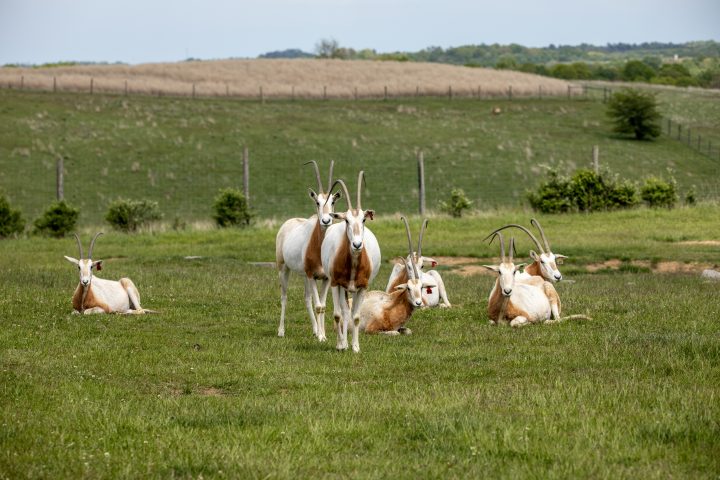
The organization also works to protect native species closer to home. Staff members are helping raise eastern hellbenders and American burying beetles for future release into the wild in Ohio and neighboring states.
While conservation is at the heart of The Wilds’ mission, the property also offers visitors a chance to experience the landscape in ways that go far beyond a traditional safari tour.
“The Wilds is essentially an eco-resort,” Greathouse said. “We have overnight accommodations ranging from the Hellbender RV Park, where we have an RV campground with up to 72 spots for folks to stay the night, to our Nomad Ridge yurts, which were just named the No. 1 glamping spot in the United States by a USA Today poll.”
Guests can also stay in Straker Lakeside Cabins or at The Lodge on the property, while adventure-based activities offer even more ways to explore the reclaimed landscape. Horseback safaris, zip line tours, and fishing excursions across more than 100 lakes give visitors opportunities to experience the property beyond the open-air bus tours.
Beyond recreation, The Wilds also places a major emphasis on education, offering hands-on experiences for both children and adults.
Danny Lough, director of conservation education and engagement at The Wilds, oversees many of the guest programs designed to connect visitors with wildlife and conservation efforts.
“We can only empower people to save wildlife through education,” Lough said. “Giving opportunities for guests to witness the amazing wildlife, both our exotic wildlife and our native species, right in their own backyard, and telling their stories, is incredibly important.”
One of the organization’s most popular educational offerings is WildeCamp, a residential summer camp program for children ages 8 to 18. Younger campers can experience safari tours, canoeing, and opportunities to interact with wildlife, while older students interested in wildlife conservation careers can participate in “Eco Ambassadors,” where they shadow scientists, or the “Dirty Wild Jobs Camp,” where they shadow animal management and veterinary staff.
The Wilds also partners with local schools through programs like Wild About Fourth Grade, which brings every fourth-grade class in Muskingum County to the property for conservation-focused learning experiences tied to classroom curriculum.
Educational opportunities extend beyond children’s programming. Guests can participate in birding tours, ecology tours, and overnight experiences that allow visitors to stay in the middle of the pastures surrounded by wildlife.
“You get to fall asleep surrounded by rhinos and giraffes and then under one of the darkest skies in Ohio,” Lough said.
Beyond the educational programs and overnight experiences, The Wilds continues to leave a lasting impression on many of the guests who visit each year.
For Greathouse, that unique setting is part of what makes The Wilds so special.
“It’s like the best-kept secret in the region,” Greathouse said. “You can show up out here and see, depending upon where you’re driving, a herd of almost 100 bison on a hillside in Ohio, like it would have been a couple of hundred years ago.”
Today, The Wilds welcomes roughly 100,000 guests annually and generates an estimated $20 million economic impact for the surrounding region. At the same time, the property continues to serve as both a conservation center and an educational resource, giving visitors a closer look at wildlife and the work being done to protect vulnerable species. From safari tours and overnight stays to breeding programs and conservation research, The Wilds has become a destination that blends tourism, science, and education in a way that is unique to Ohio.


