Ohio Ag Net | Ohio's Country Journal Ohio Ag Net | Ohio's Country Journal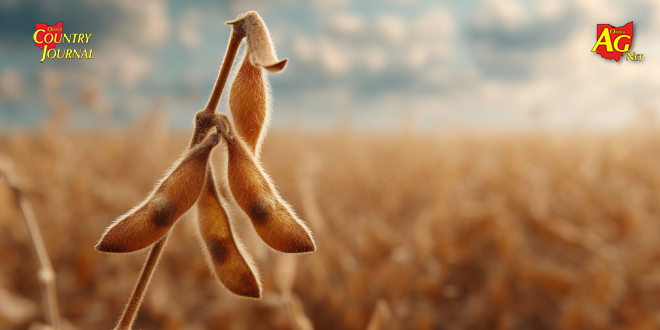
By Doug Tenney, Leist Mercantile
Last month, my cycling friend Roger and I were enjoying a Saturday morning bike ride in Hocking County on Big Pine Road. We’ve ridden this route several times a year for the past eight years, passing the same small, run-down barn just a few feet off the road. It always has an open-air pen with a handful of hogs, and, without fail, a terrifying, nose-curling, unforgettable stench.
I was a few feet ahead of Roger, hesitant to believe it might not happen this time. I thought to myself, Wait for it, wait for it. And suddenly, while entirely expected, Roger painfully announced, “And there it is.”
That phrase feels fitting for farmers with the rollercoaster of trade policy especially when it comes to China. After months of waiting in anticipation, an agreement has finally been made. And there it is.
As this column is being written, the U.S. government remains in shutdown mode. Some anticipate it could extend into early December. The grain sector continues to suffer from a lack of government reports, including weekly crop progress and daily grain export sales updates. However, the U.S. grain inspections report for Oct. 13 detailed strong corn exports, while soybean exports remain weak. Some analysts suggest U.S. soybean export projections could be anywhere from 250 million to 450 million bushels too high.
The biggest casualty of the shutdown is the monthly WASDE report, which tracks supply and demand. It’s worth noting that NOAA continues to provide weather forecasts, likely due to the need for hurricane tracking, as the U.S. hurricane season doesn’t end until Nov. 30.
Throughout much of October, the APEC (Asia-Pacific Economic Cooperation) meeting dominated headlines. The event was expected to include trade talks between U.S. President Donald Trump and Chinese President Xi Jinping. Soybean prices have been another casualty of the uncertainty surrounding those potential talks.
Some producers, half-jokingly, suggest that what the U.S. grain market needs is a drought in major growing areas, as long as it’s not in their own backyard. A drought did occur last year in central and southern Ohio, leading to disappointing corn and soybean yields. “Why not Brazil instead?”
If you’re pinning your hopes on a South American drought to boost soybean prices, you might want to look elsewhere. During the last half of October, South American weather was generally favorable. The threat of sustained heat was lacking. Brazil had daily highs in the 80s and low 90s, tempered by abundant cloud cover. Conversely, Argentina was enjoying daily highs from the 70’s to mid-80’s and blazing sunshine. The presence of a La Nina providing a price rally for soybeans is not issue. It is a weak one at best. In addition, keep this in mind: droughts are extremely rare across northern and central Brazil from mid-November forward.
Are producers staying “loudly quiet” about how bad crops look this fall as corn and soybean harvests continue? Corn yields, while disappointing, often turned out better than feared despite the prolonged August drought. Soybean yields, however, were alarmingly low, with yields in the 30s showing up in many central Ohio fields. Overall, soybeans were more disappointing than corn.
By mid-October, at least 75% of soybean harvest in central Ohio was complete, thanks to three weeks of excellent weather. Producers were laser-focused on harvesting soybeans quickly — a lesson learned after the hurricane rains of September 2024 delayed harvest and caused soybean damage as high as 20% or more. Grain facilities took advantage of that situation, blending the high-damage beans for profit opportunities seldom seen.
Grain prices will likely continue to fluctuate sharply, driven by the headlines of the day. By mid-October, daily corn and soybean trading ranges were narrower than normal due to the lack of fresh news. And the conversation around rare earth minerals isn’t a passing story, it’s expected to grow in importance in the months ahead.
Thought for the day: “There is no certainty; there is only adventure.” — Oliver Wendell Holmes Jr.