September 24, 2025 Country Life, Crops, Top Headlines
By Brianna Smith
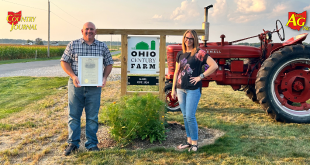
For Chris Karl, nostalgia is more than just a feeling. It’s something you can see in the barns, the shop, and the office of Kenser Farms, the land his family has tended for more than a century. It’s in the tractor his grandfather once bought brand new, still kept in working order in the barn, and in the many horseshoes displayed around the property, reminders of the generations who cultivated the land before him.
That respect for history is what fuels Karl’s pride in carrying on a Century Farm, recognized for more than 100 years of continuous family ownership.
“I’m worth 300 billion dollars because I’ve taken something over that was in our family for generation after generation,” Karl said. “To me, you can’t buy that.”
For him, nostalgia isn’t about looking backward; it’s about honoring the past while working the land in the present.
Chris’s great-grandfather, Roma Karl, the son of German immigrants, grew up in New Washington, where he met Josephine Burger.… Continue reading
Read More » September 24, 2025 Crops, Top Headlines

By Aaron Wilson, Ohio State University Extension
Climate rankings for August showed that August 2025 was the driest August on record for Ohio (1895-2025). Conditions through the first three weeks of September have not improved, as the entire state has had below normal preciptiation over the last 30 days (Figure 1). Last week’s U.S. Drought Monitor shows that about 2% of Ohio is in D3-extreme drought (e.g., Carroll, Columbiana, and Jefferson Counties) with about 95% of the state in some drought category (D1-D3). With warmer temperatures over the last couple of weeks, conditions have worsened with rapid crop transition or death (late planted crops), low farm ponds, poor pastures, increased water hauling and fire risk. Please consider submitting your observations to the National Drought Mitigation Center’s Condition Monitoring Observer Reports platform. For the latest drought conditions and agricultural resources, please visit our Drought Conditions and Resources page or the State Climate Office of Ohio.… Continue reading
Read More » September 23, 2025 Crops, Featured Audio, Top Headlines
Steve Reinhard, past chair of the United Soybean Board, talks with Ohio Ag Net’s Dusty Sonnenberg about the work that checkoff dollars are doing to broaden the product capabilities of soybeans. In this featured audio, the two discuss soy-based bar and chain oil, rubber replacements, firefighting foam, and more.
Learn more about your soy checkoff investments driving value back to the farm at unitedsoybean.org.… Continue reading
Read More » September 23, 2025 Featured News, Livestock, Top Headlines

On Sept. 21, Mexico’s National Service of Agro-Alimentary Health, Safety, and Quality (SENASICA) confirmed a new case of New World screwworm (NWS) in Sabinas Hidalgo, located in the state of Nuevo León, less than 70 miles from the U.S-Mexico border.
This is now the northernmost detection of NWS during this outbreak, and the one most threatening to the American cattle and livestock industry. Sabinas Hidalgo is located near the major highway from Monterrey, Nuevo Leon, to Laredo, Texas, which is one of the most heavily trafficked commercial thoroughfares in the world.
“Protecting the United States from NWS is non-negotiable and a top priority of the Trump Administration,” said U.S. Secretary of Agriculture Brooke L. Rollins. “This is a national security priority. We have given Mexico every opportunity and every resource necessary to counter NWS since announcing the NWS Bold Plan in June 2025. Nevertheless, American ranchers and families should know that we will not rely on Mexico to defend our industry, our food supply, or our way of life.… Continue reading
Read More » September 23, 2025 Country Life, Top Headlines

By Don ‘Doc’ Sanders
A prosecuting attorney called me a few years ago from Harrogate, Tennessee. He asked if I would assist him on a case involving animal welfare. I have occasionally testified in court when an animal owner has allegedly abused animals in their care or perhaps did not provide adequate nutrition or housing for their animals. From past experiences, I now rarely accept companion animal legal cases. Occasionally, I get a case involving animals in herds that are being raised for food consumption. I don’t receive cases very often, but I do participate in livestock care evaluations when requested. As a board-certified Theriogenologist (specializing in animal reproduction), I regularly receive queries in the United States and occasionally internationally, from countries such as China, Mongolia, Colombia, Japan, and others, regarding livestock care and reproductive issues.
This prosecuting attorney sent me the file on Elmer McNary, an Angus herd owner who had created significant controversy.… Continue reading
Read More » September 23, 2025 Crops, Ohio Field Leader, Top Headlines

By Dusty Sonnenberg, CCA, Field Leader, a project of the Ohio Soybean Council and Soybean Check-off
Recently, 29 farmers and staff from 12 different qualified soybean states in the United States traveled to South Korea and Japan to learn about how the U.S. Soy Export Council (USSEC) functions and helps market Ohio and U.S. soybeans to other countries internationally. Kiley Holbrook, policy and demand coordinator at the Ohio Soybean Council, and Mackenzie Joseph, communications coordinator at the Ohio Soybean Council, were among the participants.
The group observed how U.S. soy was used across the supply chain. One stop was at the Incheon Port in Seoul, South Korea. That facility handles more than 3.5 million containers a year, which includes shipping soy products. They toured a CJ CheilJedang crush plant in Korea that processes U.S. soybeans. They visited Bookook Feed, where the company processes soybean meal into value-added animal feed. They also toured the Fuji Oil Company in Japan, where they produce cooking oil, as well as powdered and textured soy protein, which serves as an ingredient for food companies and multiple other buyers, users, and end customers of U.S.… Continue reading
Read More » September 22, 2025 Crops, Top Headlines, Videos
Ohio leaders welcomed a trade delegation from Taiwan this week for the signing of a $6.4 billion grain agreement that strengthens corn and soybean exports from the Buckeye State. The visit included a stop at the farm of Bill Bayliss and family near West Mansfield before the official signing ceremony at the Ohio Statehouse.
Hear from ODA Director Brian Baldridge, farmer Jana Caudill of Wigwam Enterprises, Michael Lu with the U.S. Grains & BioProducts Council, Craig Downing with the Ohio Corn Marketing Program, and Wendy Osborn with Ohio Corn & Wheat on what this deal means for Ohio agriculture and its global partners.… Continue reading
Read More » September 22, 2025 2025 Ohio Crop Progress Report, Crops, Top Headlines
The Sept. 22 USDA NASS Crop Progress Report shows Ohio harvest is underway. Soybeans are 10% harvested, compared with 4% for the five-year average, with 71% of beans dropping leaves. Soybean condition is rated 40% good to excellent and 41% fair.
Corn harvest is 6% complete, slightly ahead of the 3% five-year average. Overall, 93% of the crop is dented and 51% is mature. Corn condition is rated 44% good to excellent and 40% fair.
See the full report here. … Continue reading
Read More » September 22, 2025 Between the Rows Archive, Crops, Top Headlines
Jade Newton – Preble County
Harvest has started for a good share of folks here in southwest Ohio. A lot of the earlier soybeans are already being cut, and I’d say more beans have been run than corn at this point. Moisture levels on soybeans are really low. I’ve heard anywhere from 9% to 11% on the earlier varieties. Later-planted beans are still full and green, not quite ready yet.
Corn is following the same pattern. The earlier hybrids in the 100- to 107-day range that were planted early are drying down nicely, and some of that has been harvested. Corn that was planted in early May with longer maturity, in that 112- to 114-days range, is still pretty wet, and anything planted late May is still green but moving along with this dry spell.
We could really use some rain. Fields are so dry that the fire risk is high, and it wouldn’t hurt to see a tick of moisture to take the edge off.… Continue reading
Read More » September 22, 2025 Country Life, Crops, Livestock, Podcasts, Top Headlines

The Ohio Ag Net team wrapped up yet another successful year at the Farm Science Review. To all who stopped by to see us: Thank You! We’re so glad we could share such a great week with you all. Till next year!
This week on the Ohio Ag Net Podcast, we pulled together updates from across Ohio agriculture while at the Farm Science Review. Our own Dusty Sonnenberg caught up with State Director of Agriculture Brian Baldridge. The two discussed the latest happenings in the statehouse that impact Ohio agriculture; specifically, the recently passed budget bill. Director Baldridge also shared about his experience at the National Association of State Departments of Agriculture annual conference in Arkansas, the current status of Epizootic Hemorrhagic Disease (EHD) in cattle, and everything in between.
Ohio’s Country Journal Editor Brianna Smith sat down with Luke Crumley, Director of Public Policy & Sustainability for Ohio Corn & Wheat.… Continue reading
Read More » September 21, 2025 Country Life, Top Headlines

By Fred Hendricks, OCJ Field reporter
Many people around the world are familiar with the International Harvester Company. However, many may not know Ohio’s tie to the iconic tractor brand. International Harvester Company was formed in 1902. The company traces its roots to Cyrus McCormick who started the McCormick Reaping Company. Although Obed Hussey is credited with the first reaper patent, it was Cyrus McCormick’s enhancements that made the reaper more widely accepted.
At the turn of the century, farm power relied almost entirely on draft animals. Oxen, mules, and especially horses provided the labor, with horses proving the most economical and thus performing many farm tasks. However, working with horses could be nearly as backbreaking as doing the tasks by hand, even if they provided greater efficiency.
As farmers searched for alternatives, early steam engines came into use. These could turn belts to power equipment or haul objects horses could not, but they were cumbersome, costly, and difficult to operate.… Continue reading
Read More » September 21, 2025 Crops, Ohio Field Leader, Top Headlines

By Dusty Sonnenberg, CCA, Field Leader, a project of the Ohio Soybean Council and Soybean Check-off
Soy product exports go into a variety of markets and locations that most Ohio farmers could never imagine. East Africa is the fastest-growing region for aquaculture on the African continent. Located immediately north of the equator, just above Lake Victoria in east-central Africa, Uganda is a landlocked country. It is not far from the Red Sea, the Arabian Sea, and the Indian Ocean. It is not a place one would expect to find a soybean farmer from Ohio, but that is just where Chad Warner of Darke County recently traveled in order to attend an African aquaculture conference, World Aquaculture Safari ‘25, in Munyonyo, Kampala, Uganda. Warner is a member of the Ohio Soybean Council and traveled as a part of the World Initiative for Soy in Human Health (WISHH), which is a program of the American Soybean Association.… Continue reading
Read More » September 21, 2025 Crops, Q&A with a CCA, Top Headlines

By Michael Watercutter, Conservation Agronomist Mercer Landmark & American Farmland Trust.
Q: What cover crops are recommended for farmers trying the practices for the first time, and why?
The use of cover crops on your field can unlock the true potential of your soil. Making your first cover crop plan can be intimidating, but starting easy and keeping it simple will help you find success. After corn harvest, I recommend using cereal rye. Cereal rye can help loosen up some surface compaction, make the ground mellow to plant soybeans in, provide some biomass for weed suppression, and conserve moisture through the summer. For wheat fields, planting a mix of oats and radish post-harvest lets you take advantage of the longer growing season for these winter-kill cover crops. Oats have a good fibrous root system, helping to loosen the top layer of soil, and radishes can penetrate deep into the soil profile to alleviate compaction and scavenge nutrients for the next cash crop.… Continue reading
Read More » September 21, 2025 Crops, Top Headlines

By Clint Schroeder, Program Manager for Ohio Farm Business Analysis Program and Eric Richer, Field Specialist, Farm Management
With the projected price discovery period now closed for winter wheat, Ohio farmers have until September 30, 2025, to select the crop insurance coverage that best suits their operation. However, the decision on policy type and coverage levels for 2026 crops could be impacted by the passage of the One Big Beautiful Bill Act (OBBBA). Signed into law on July 4, 2025, OBBBA offers higher area-based policy coverage levels, increases premium support, and expands support for beginning farmers and ranchers. This article will highlight these key changes so that producers can make more informed decisions for 2026 production on their farm.
Previously, producers who wanted to purchase the Supplemental Coverage Option (SCO) as part of their policy were required to enroll those base acres in the Price Loss Coverage (PLC) program. The OBBBA has decoupled SCO from the traditional Farm Bill decision, allowing farmers to enroll in either the Agriculture Risk Coverage (ARC) or PLC program.… Continue reading
Read More » September 18, 2025 Country Life, Top Headlines, Uncategorized
The 2025 Farm Science Review has come to a close, and what a memorable week it was. Highlights included Monday’s vendor luncheon, Tuesday’s kickoff breakfast, and the Ice Cream Social celebrating Dale Minyo’s upcoming retirement. On Wednesday, AgRevolution surprised Dale with a cake during his remote broadcast, adding to the festivities.
Throughout the show, our team was on the ground — from the Gwynne Conservation Area to the demonstration fields — capturing interviews, covering events, and sharing the stories of exhibitors and attendees. Visitors even had fun trying out their best Dale Minyo impressions.
Thank you to everyone who joined us at this year’s Farm Science Review. We’re grateful to have shared it with you!
… Continue reading
Read More » September 18, 2025 Crops, Ohio Field Leader, Top Headlines
By James Hoorman, Hoorman Soil Health Services
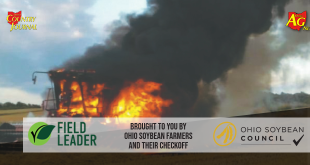
August and September have been dry, with higher-than-normal daytime temperatures prevailing. Crops are drying down quickly, so harvest may be early. All that dry tinder may create fire hazards when harvest equipment starts rolling.
Dry corn and soybean leaves, crop dust, and dry grass are all highly combustible for potential harvest fires. Hot equipment, especially engines and hot exhaust, plus friction from fast-moving gears and belts, hot hydraulic hoses, or hot bearings; it’s no wonder harvest fire hazards are common. Here are several precautions from Ohio State University Extension that farmers can take to protect harvest equipment.
When combines get used for many hours, they get hot; so park them away from buildings and especially fueling stations. You might not only lose a combine but also farm buildings or a fueling station. Regular maintenance is required. Check the machine daily for any overheated bearings or damage to the exhaust system.… Continue reading
Read More » September 18, 2025 Crops, Featured Audio, Top Headlines
In this featured audio, Ohio Ag Net’s Dusty Sonnenberg sits down with United Soybean Board past chair Steve Reinhard to talk about how checkoff dollars are at work building demand here at home. Reinhard highlights soybean oil’s role in biodiesel and Goodyear tires, the health benefits of soybean meal in livestock diets, and the value of high oleic soybeans in both human nutrition and dairy rations. From poultry markets to pork production, and from regional projects to national impact, soybeans are helping livestock producers improve efficiency and profitability while also opening doors for new consumer products.
Learn more about your soy checkoff investments driving value back to the farm at unitedsoybean.org.… Continue reading
Read More » September 18, 2025 Livestock, Top Headlines

The Ohio State University Extension is offering a new educational opportunity for goat producers this fall. The “All About Goats!” webinar series will connect farmers with Extension and industry professionals to discuss key topics in goat production and management.
Sessions will be held online via Zoom from 7–8 p.m. EST and include:
- Goat Health and Care – Sept. 22
Extension specialist Brady Campbell will review proper care for goats of all ages and explain how to keep them healthy and productive. - Farm Business and Management – Oct. 6
Extension specialist Eric Richer and Extension educator Pressley Buurma will cover farm management strategies, budgeting, and recordkeeping. - Goat Processing – Oct. 20
Extension specialist Lyda Garcia will explain carcass cuts and how to process a goat at home. - Livestock Marketing – Nov. 3
Extension specialist Garth Ruff will discuss the goat market and how to effectively market goats to meet customer needs.
…
Continue reading Read More » September 18, 2025 Livestock, Top Headlines
By Brianna Smith
In 1875, William Martin left Delaware and traveled to Ohio in search of an opportunity to farm. He purchased 400 acres in Coshocton County, where he began his diversified farm. Shortly after arriving in Ohio, William sold the farm to his brother, David Martin. David was the only sibling in the Martin family to marry and have children, and his legacy remains on the farm today. That legacy, now carried on by Bill Daugherty and his son Kyle, is one of resilience and reinvention, proof that a farm with 150 years of history can still be a leader in adopting the newest technology.
“My grandfather married into the farm. When he married my grandmother, the farm changed from the Martin Farm to the Daughtery Farm. It was a diversified farm at that time, still,” Bill said. “In 1936, my grandfather decided to put out a hybrid seed test plot.… Continue reading
Read More » September 17, 2025 Crops, Top Headlines, Videos
United Soybean Board past chair Steve Reinhard joins Ohio Ag Net’s Dusty Sonnenberg to talk about how soybeans are fueling demand here at home. From the growth of biofuels to the benefits of soybean meal in poultry and hog diets, Reinhard highlights how checkoff dollars are creating value for livestock producers and beyond.
New innovations like soy-based firefighting foam, biodegradable plastics, tires, and even medical applications are expanding the reach of soy. Plus, specialty varieties like high oleic soybeans are boosting milk fat content and adding value to dairy producers.
Learn more about your soy checkoff investments driving value back to the farm at unitedsoybean.org.… Continue reading
Read More » Ohio Ag Net | Ohio's Country Journal Ohio Ag Net | Ohio's Country Journal