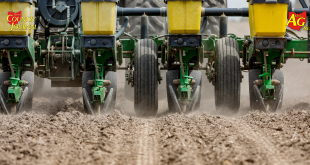
As the 2026 crop gets established across Ohio, many growers have their fertility plans in place, but the season is far from predictable. Weather stress, compaction, disease pressure and other in-season challenges can impact how well crops actually take up nutrients, and those issues may not show up in a spring soil test. Joining us today is Ryan Harbison, an agronomist with AgroLiquid to discuss how tissue sampling can help farmers better understand crop health during the growing season and make more informed nutrient management decisions.
The gate car rolls away and hooves thunder down the track. Horses and their drivers weave in and out of traffic, battling for position in a fast-paced, tightly contested race. Carts draw close, drivers make split-second decisions, and the grandstand erupts as bettors watch their picks charge toward the finish line. There are few things as exciting as a harness race.
For many fans, the thrill begins and ends at the racetrack. However, through fractional ownership opportunities, race enthusiasts have the chance to experience the sport on a deeper level, not just as spectators, but as owners with a stake in the horse racing down the track.
Jessica Schroeder is the owner of HorsePlay Racing Stable, a fractional ownership group with five horses. Through the program, individuals can purchase a percentage of a racehorse, allowing them to enjoy the excitement of ownership without taking on the full cost and responsibility of doing it alone.… Continue reading
My maternal grandmother had a younger sister named Marcella, whom I adored. She was married to Howard, a nice man, who also adored Marcella. Together they owned and operated a small vacation spot in West Central Minnesota, the Walleye Inn and Resort near Osakis, Minn., on the southern border of Lake Osakis. My parents, my brother, and I visited them there on several occasions. I will never forget how clear the air and pure the lake water were.
Lake Osakis was known for fishing and was designated a premier walleye location. There were also northern pike, crappie, blue gill, and bass.
After a day of casting, there was a meal at the restaurant, often accompanied by live music and dancing. To this day, I use Aunt Marcella’s recipe for Western dressing when I serve leafy salads.
I always wanted to visit them in the winter. They spent those months ice fishing, snowmobiling, and cross-country skiing.… Continue reading
Ohio farmers made planting progress last week, though wet conditions continued to limit fieldwork. USDA says there were 2.4 days suitable for fieldwork for the week ending May 24.
Corn was 63% planted, up from 52% the previous week, but still behind the 67% five-year average. Corn emergence reached 45%, ahead of both last week’s 27% and the 38% average.
Soybeans were 57% planted, up from 46% last week and just behind the 59% five-year average. Soybean emergence reached 38%, ahead of 24% last week and the 29% average.
Winter wheat was 84% headed, well ahead of the 58% five-year average. Ohio wheat condition was rated 68% good to excellent, with 57% good and 11% excellent.
Oats were 88% planted and 78% emerged, with 2% headed. Oat condition was rated 71% good to excellent.
Soil moisture remains plentiful. Topsoil moisture was rated 52% adequate and 47% surplus, while subsoil moisture was 56% adequate and 29% surplus.… Continue reading
By Gabriel E. Lade, C. William Swank Chair in Rural-Urban Policy and Associate Professor, Ohio State University
*The following is adapted from a four-part newsletter series. Read Lade’s full newsletter and the next three parts online at gelade1.substack.com.
AI chatbots are everywhere. I use them regularly to help me code, organize files, and correct typographical errors. I also recently used one to help me with a landscape design project, though I eventually called in a professional.
While it feels intangible, every time you type a question into an AI chatbot, something physical happens somewhere. Processors heat up, cooling fans whirl, and a lot of electricity and water get used. That something physical is increasingly happening in Ohio, especially in Central Ohio. This occurs in buildings the size of a big-box store (or even larger), surrounded by transmission lines, farm fields, and residential areas.
What is a data center?
The term “data center” covers a lot of ground, so it’s worth being precise.… Continue reading
By Dusty Sonnenberg, CCA, Field Leader, a project of the Ohio Soybean Council and Soybean Checkoff
2026 has caused Ohio to be a divided state. The southern portions enjoyed a normal-to-slightly-early planting season, with good soil conditions and initially favorable weather. The central part of the state, between Routes 40 and 30, is a mix of early and later planting, with some areas fit and very similar to the neighbors to the south. Other areas in the middle of the state are more like the northern part of Ohio. Much of northern Ohio has struggled to string together enough consecutive dry days to accomplish timely field work. Little by little, more planting progress has been made in the north.
Those who planted early in some areas struggled with late frost and freeze conditions, which damaged plant stands. The rain this past weekend flooded some fields in parts of southwest Ohio, while it prolonged the saturated soil conditions in many others.… Continue reading
As part of the Ohio Field Leader Roadshow, Dusty Sonnenberg visits with Bret Margraf of Margraf Family Farms in Seneca County to talk about the farm’s evolving approach to soil health. From decades of no-till and cover crop adoption to integrating Red Poll cattle into the operation, Margraf shares how livestock grazing is helping improve soil function, extend forage opportunities, and add value back to the grain operation. The conversation also highlights innovative practices including interseeding forages into corn and experimenting with wheat-soybean polycropping systems.… Continue reading
Applications are open for the 2026 Growing Tomorrow Grant, a program offering up to $100,000 to support innovative agricultural business ideas and projects led by Ohio’s next generation of farmers and entrepreneurs.
Created through the vision and generosity of former Ohio Farm Bureau Trustee Mike Boyert, and his wife, Patti, the grant helps create opportunities for early-stage agricultural businesses to move forward by addressing financial and startup hurdles.
Available to any Ohio Farm Bureau young farmer or entrepreneur member, the funding is available for efforts focused on agricultural education, environmental stewardship, rural economic opportunities and solutions that strengthen local communities.
“Ohio Farm Bureau and our foundation have long been focused on creating opportunities for our young agricultural professionals, and as agriculture faces a long list of challenges, the grant helps these young leaders use their skills to address these challenges and generate a deeper understanding of farming to our consumers and communities,” said Kelly Burns, Ohio Farm Bureau Foundation executive director.… Continue reading
By Wm. Bruce Clevenger, Ohio State University Extension, Field Specialist, Farm Management
After corn and soybeans are in the ground, the last thing many farmers want to do is revisit the numbers. Planting is stressful enough — why dig back into cost of production? The short answer is simple: A lot has changed since last fall, and those changes matter.
From November 2025 to the present, many operations have adjusted original plans. That is normal. Weather conditions, economics, and agronomic considerations often force changes at planting, and those decisions are made with the best information available at the time. Not every change of plan adds cost to the budget. Still, every adjustment affects the actual 2026 cost of production.
Cost of production is never final until the combine leaves the field. Until then, it remains only a snapshot in time. Recalculating costs after planting provides an opportunity to replace estimates with actual numbers for inputs used so far in 2026. … Continue reading
There is a program for young, beginning and small farmers to set them up for success. Learn all about the Growing Forward initiative from Farm Credit Mid-America, which provides this important segment of customers with access to sound and constructive credit through individualized programs and products.
Plus, if you live in rural Ohio, you know first-hand that there are challenges facing the agriculture sector & communities. How is USDA Rural Development working to improve the lives of rural Ohioans. The Ohio Director of USDA Rural Development Charles Tassell checks in with the details.
Things are wet again, and we have more rain coming, but last week we had three or four, maybe four and a half days where we could get back in the fields. I think a lot of guys around here got a lot of work done, but now we are back in the waiting game again.
If I had to guess, I would say most everyone around here is probably 75% to 85% done planting. We are about the same. We probably have one big day of corn planting and one big day of bean planting left. Tomatoes are just a little bit behind schedule, but not too bad. Next week, we have three big days of planting to catch up, and I would say we are in a pretty good spot right now.
We also have one 45-acre wheat field. It looks good, but wheat isn’t a major part of our rotation.… Continue reading
A new statewide initiative, the Ohio Farm Transition Network (OFTN), has officially launched operations to address one of the most pressing challenges facing Ohio agriculture: helping farm families successfully plan for the transition of their farms to the next generation.
“Whether it was an Ohio Farm Bureau event, an Ohio State University Extension meeting, Ag Credit, Farm Credit, Nationwide, Corn and Wheat, or the Soybean Council, everybody was focused on farm transitions and helping farmers navigate the legal and financial complexities, as well as some of the family challenges, that come with passing a farm from one generation to the next,” said David Marrison, OSU Farm Management Specialist and interim director of the Farm Financial Management and Policy Institute. “All of our organizations were working separately on the same issue. The genesis of the Ohio Farm Transition Network was really asking, as organizations, can we come together as one voice to surround our farmers and help them in this critical area of farm transition and estate planning?”… Continue reading
Did you notice the long list of scheduled events below? These events, and much more educational value, are on the way thanks to funding from Cargill’s “From the Ground Up” program and funds from The Nature Conservancy’s “Farmers for Soil Health” program.
The Ohio No-till Council has four farmers who are “planting green.” Corn yields and other measurements are being taken to compare the cover crop’s value when terminated early with that of spraying after planting.
Also, soil health quantifiers will be measured on about 15 no-till fields compared to nearby tilled ground. Another 15 no-till farmers will share financial information.
On June 18, starting with supper at 6:00 p.m., the Hatfield family in Clermont County will host a field event (1174 SR 222, Felicity). The Hatfields intercrop soybeans into wheat on their silty clay soil. Roger Wenning, a no-till farmer in Southeast Indiana, will share how no-till, cover crops, and nutrient management helped him transform the same tough soils to increase soybean yields by more than 50 bu/acre.… Continue reading
America’s demand for meat continues to grow, even as the cost of beef, pork and chicken rises. Memorial Day weekend is the unofficial kickoff to grilling season, and in the latest Market Intel, American Farm Bureau Federation economists analyzed what prices shoppers may find at the grocery store. In this Featured Audio, the Ohio Ag Net’s Ty Higgins digs deeper into the data with AFBF economist Bernt Nelson
The Ohio AgriBusiness Association (OABA) Educational Trust has officially surpassed $1 million in scholarship support awarded to students pursuing degrees and careers in agriculture.
Since awarding its first scholarship in 1962, OABA has invested in the future of Ohio agriculture by supporting students preparing for careers across the industry. In the 1990s, the OABA Educational Trust was established to expand scholarship opportunities and strengthen workforce development efforts for Ohio agriculture.
Today, the Educational Trust has supported more than 944 Ohio students pursuing agriculture-related degrees and careers, helping develop the next generation of leaders in agribusiness, agronomy, communications, engineering, animal science, precision agriculture and other agricultural fields.
“This milestone represents decades of commitment from OABA members and industry partners who believe in investing in students and strengthening the future of Ohio agriculture,” said Melinda Witten, president and CEO of OABA. “While we are proud to celebrate this achievement, we’re focused on continuing to grow opportunities for future students and building toward the next million dollars in scholarship support.”… Continue reading
By Wm. Bruce Clevenger, Ohio State University Extension, Field Specialist, Farm Management and Certified Crop Adviser
What is drainage water recycling (DWR)?
Two organizations, Transforming Drainage.org and the Environmental Defense Fund, provide practical descriptions for DWR. Drainage water recycling is the practice of capturing excess water drained from fields, storing it in a pond, reservoir, or drainage ditch, and using it to irrigate crops during periods of water deficit. These systems are typically comprised of three main components: pre-existing subsurface drainage, used to drain water from agricultural lands during times of excess water; a water storage system, used to capture and hold the excess water; and an irrigation system, used to resupply the stored water to agricultural lands during a water shortage. Since each component varies based on specific site characteristics and needs, drainage water recycling can take many different shapes and sizes.
What is the water supply for DWR, and how does water move about the system?… Continue reading
By Dr. Horacio Lopez-Nicora, OSU Extension Soybean Pathologist and Nematologist, adapted from C.O.R.N. 2026-14
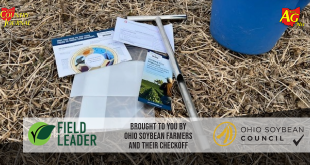
The soybean cyst nematode (SCN) remains one of the most damaging soybean pathogens affecting soybean production in Ohio. Because significant yield losses can occur without visible symptoms, soil sampling remains the only reliable way to determine whether SCN is present and at what levels. Knowing your SCN numbers is critical for selecting effective management strategies and protecting soybean yield potential.
Spring, before planting, is an excellent time to sample fields for SCN. These samples can help identify fields with SCN, estimate population densities before the season begins, and guide management decisions for the current and following years. If soil samples are already being collected for fertility analysis, a subsample can also be used for SCN testing.
We recommend collecting 15 to 20 soil cores, 8 inches (20 cm) deep, using a cylindrical soil probe approximately 1 inch (2.5 cm) in diameter for every 20-acre (8-ha) area.… Continue reading
The U.S. Department of Agriculture is taking new steps to expand domestic fertilizer production, Secretary Brooke Rollins said during a press conference on May 19.
The announcement includes accelerated permitting for a major ammonia plant in Louisiana, renewed efforts to move projects forward under the Fertilizer Production Expansion Program and the search for a full-time input economist focused on agricultural input costs and market transparency.
Rollins said the overall goal is to increase domestic fertilizer production by about 4.5 million tons per year, serving roughly 400,000 producers and 290 million acres of farmland. She did not provide a timeline for when the added fertilizer production would be online and available to farmers.
The first project highlighted was the Blue Point Project in Louisiana, a proposed $3.7 billion ammonia plant. Rollins said permitting for the project is expected to be completed within 45 days, and the facility is expected to become the world’s largest ammonia plant once completed.… Continue reading
Butter appears to be making a comeback. Earlier this year, the 2025 Dietary Guidelines for Americans, after years of promoting low-fat choices, recognized a place for full-fat dairy products. Growing up in the Mitchell household, there was always a plate of butter on the table, available around the clock. Then, after marriage, the dairy influence of the Detwiler family was, of course, strongly pro-butter.
I will confess that in the early years after completing my dietetic internship and entering the workforce, I moved butter to the shelf in favor of other options. In the 2010s, however, I had to channel my mother’s sleuthing skills, something akin to Jessica Fletcher. Not to solve a murder, but to uncover the mystery of the teeth marks appearing on butter sticks in the refrigerator. Lo and behold, the culprit was Luke, our second son, skinny as a toothpick, secretly eating butter straight from the stick.… Continue reading
In 2017, Farm Credit Mid-America recognized a growing gap in the lending marketplace. More people wanted to live in the country, but rural properties with acreage, outbuildings, and unique land values do not always fit neatly into traditional residential lending models. Recognizing this challenge led to a unified approach between Farm Credit Mid-America and Rural 1st ®, designed to serve rural families through every stage of life, both on and off the farm.
As part of the Farm Credit System, Farm Credit Mid-America has been a reliable source of credit for more than a century. In addition to traditional ag lending for land, operating expenses, equipment, livestock and on-farm improvements, the cooperative specializes in financing for rural living – such as purchasing land, buying a home in the country, or building on rural property. However, many rural residents who were not actively farming did not realize these options were available to them.… Continue reading
 Ohio Ag Net | Ohio's Country Journal Ohio Ag Net | Ohio's Country Journal