Last month I went whitewater rafting on the New River in West Virginia with a cycling friend and his daughter. It was my first time participating. Our guide was quite experienced and peppered our time on the river with tales of the scenery and the riverbanks. He also shared the name of each rapid we would be trekking through. There was even one shoreline rock called Africa, as its shape was part of the rock itself.
Numerous times, we would shoot the rapids going backward. If anyone tells you that you won’t get soaked while whitewater rafting if you don’t sit up front, they are not being truthful. I was the second person on one side, and I got soaked numerous times, even though the person in front of me didn’t get wet.
At this writing, reports indicate that corn planting will be suspended should all intended corn acres not be planted by the first week of June.… Continue reading
Last month was a huge first-time event for me. Many of you experience this more frequently because of the miles you drive or the equipment you move from farm to farm without a second thought. I was on a 1.5-hour drive for a family birthday gathering north of Columbus. At midday on a weekend, I was driving on Interstate 270 North on the east side of Columbus. I heard a clank, hitting something in the road. I checked my mirrors but didn’t see anything. Then I glanced at my dashboard tire-pressure monitor, which provided an alarming picture of what just happened. One tire pressure dropped precipitously to zero in under 20 seconds, now detailing a flat tire. I was able to move to immediate safety from the far-left lane, crossing four lanes of traffic, stopping at an exit ramp shoulder, and being completely out of harm’s way and out of the speeding traffic.… Continue reading
By Mike Zuzolo, Global Commodities Analytics & Consulting, LLC
The next 30 days could be crucial in determining whether the recent correction in agricultural commodities is ultimately seen as the market top for the year.
Even though the oil and wheat-led supply shocks have worsened, mid-May brought a substantial correction across many commodities, at least until the U.S.-China Summit in Beijing. This series of events makes the mid-May lows especially important as we head into summer.
If U.S. weather improves and investment funds begin anticipating higher interest rates, will they continue holding large net-long positions after northern hemisphere planting wraps up? With USDA confirming tightening wheat supplies both domestically and globally, and with the Strait of Hormuz still effectively closed as we move into the second half of May, both wheat and crude still require more demand rationing — not less — in my view.
However, as we enter the final leg of northern hemisphere row-crop planting, is that enough to keep agricultural commodities, and the broader commodity sector, in an uptrend?… Continue reading
By Wm. Bruce Clevenger, Ohio State University Extension, Field Specialist, Farm Management
After corn and soybeans are in the ground, the last thing many farmers want to do is revisit the numbers. Planting is stressful enough — why dig back into cost of production? The short answer is simple: A lot has changed since last fall, and those changes matter.
From November 2025 to the present, many operations have adjusted original plans. That is normal. Weather conditions, economics, and agronomic considerations often force changes at planting, and those decisions are made with the best information available at the time. Not every change of plan adds cost to the budget. Still, every adjustment affects the actual 2026 cost of production.
Cost of production is never final until the combine leaves the field. Until then, it remains only a snapshot in time. Recalculating costs after planting provides an opportunity to replace estimates with actual numbers for inputs used so far in 2026. … Continue reading
Last month, I visited with a fraternity brother at a memorial service for another friend. As often happens when two farmers get together, the conversation quickly turned to spring planting. He confidently said, “We are finishing up!”
That caught my attention. Based on what I knew, that didn’t quite add up. Southern Ohio farmers were already more than 80% planted, with some nearly finished a week earlier, but the northern half of the state, above Interstate 70, was lagging. And he farms near Findlay, nearly 100 miles north of Interstate 70, right in the middle of that slower progress.
It started to feel like a high-stakes poker hand. I went all in and said, “Your planting progress is less than 20%, right?”
He smiled, his shoulders dipping just a bit, and chuckled. “It’s near 10%.”
The U.S.–Iran war continues despite ongoing truce uncertainty. A U.S. naval blockade has yielded little success despite significant military presence, including at least one aircraft carrier and multiple support vessels.… Continue reading
Traders and producers alike were anxious to see if ending stocks for 2025 corn and soybeans are a ditto of the April WASDE report. In the past, a WASDE Report with little changes from the previous month has been referred to as a “punt.” Did USDA “punt,” today?
Don’t forget that the Trump/Xi summit meeting will take place this week on Thursday and Friday. This week rumors are swirling that China is inquiring about buying US corn.
Today, USDA detailed 2026 acres as follows: Corn 95.3 million acres, last year 98.8 million acres. Soybeans 84.7 million acres, last year 81.2 million acres. Wheat 43.8 million acres, last year 45.3 million acres.
Keep in mind that today USDA details their first WASDE Report for 2026 crops. It was very likely that USDA said ditto to the acres detailed within the February 2026 Outlook Forum. That report put 2026 acres as follows: Corn 94 million acres, last year 98.8 million acres (record U.S.… Continue reading
December corn broke through the $5 mark on Monday but traded back below it on Tuesday. The market is testing the upper end of its recent trading range. The funds are pretty long corn, and wheat has been driving higher, but maybe both have ran their course for the time being.
Long-term concerns about limited nitrogen production next year could potentially make today’s prices look extremely undervalued a year from now. Even if the Iranian war is resolved and the Strait of Hormuz opened up next month, fertilizer production in that region will likely still remain either offline or at a reduced capacity for a while.
For the next two months, the downside seems somewhat limited, while upside potential remains high.
Market Action – Spread Trades
Corn
As I shared previously, I am currently 80% priced on the 2025 corn crop with a short futures position in my hedge account. … Continue reading
With lost energy supplies from the Middle East still largely out of the market, I believe the commodity trade is beginning to realize that energy-intensive grain supplies could become tighter as we move through the 2026/27 marketing year.
Crude oil and wheat remain my upside leaders
Crude oil and wheat remain my leaders to the upside because I believe they have the highest likelihood of seeing supply or production cutbacks this spring. That means they also carry the greatest chance of forcing demand rationing through higher prices.
July HRW wheat futures recently climbed above $6.50 per bushel, the highest level for that contract since late March 2025. In my view, that rally has been driven by two main factors:
Ongoing energy supply disruptions tied to conflict in the Middle East
Worsening drought in the U.S. Plains
Poor to very poor winter wheat ratings are nearly double last year’s level at 32%.… Continue reading
It’s springtime! It means early Saturday morning bike rides are the norm for Roger and me. In past years, weekend cycling breakfasts consisted of a concoction that my wife, Cindy, perfected. She appropriately called it, “Egg McCindy.” It was a toasted and buttered English muffin, a fried egg, a slice of American cheese, Cindy’s home-made strawberry jam, and bacon. Best eaten with strawberry jam running down your cheek! Cycling during those weekends involved getting up earlier than on working days. I could then meet Roger before sunrise for our cycling trips into Fairfield and Hocking counties. I can still hear Cindy ask, “And why are we getting up this early?” While not thrilled at the early hour, Cindy soon pegged that early morning wake-up call as “dark thirty.” It was interesting to hear from a farmer friend at church that connation was a new one for him.… Continue reading
As this chart shows, May corn has traded in a tight 30-cent range since last June. Prices are now about 20 cents above pre-war levels. While $4.50 has been acting as a magnet for prices, the question now is whether the surging wheat prices can push corn into a new trading range.
The May contract enters the delivery period today, which will make July the new lead month for traders. July corn has usually been in a tighter 20-cent range than May. The question is: will prices return to that range, or are they going to move into a higher range?
Beans
November beans are at the top of what has been a very range-bound market between $11.40 and $11.70 since mid-February.
Looking Forward
President Trump is scheduled to meet with President Xi of China in mid-May, and both sides have incentives to reach a deal. This suggests downside risk in corn and soybeans may be limited, but it doesn’t guarantee a rally.… Continue reading
By Wm. Bruce Clevenger and Garth McDorman, Ohio State University Extension
A common reason grain marketing plans fall short is simple: They never get executed. Many plans are well‑designed on paper — with clear bushel amounts, target dates, price goals, and percentages. But when the season gets busy and urgent tasks pile up, marketing often slips to the bottom of the list. We’ve all been there: the market rallies for a day or two, and later we catch ourselves thinking, “I should have made that call.”
Most pre-harvest plans are built around price strength because of seasonality that often appears from late March through mid-June. But even the best grain marketing plan can’t help the operation if it stays hung on the fridge or on the farm office desk.
An even riskier approach is relying on a “mental” marketing plan. Without something written down and scheduled, daily responsibilities take center stage and marketing decisions get pushed aside.… Continue reading
The April USDA report, released last Thursday, showed corn and soybean carryout remained unchanged. The market showed almost no reaction to the news.
Acres Planted
The USDA’s planting intentions report from March 31 seems pointless. Survey returns have fallen from over 60% five years ago, to just under 38% this year. Plus, the Iran war spiked fertilizer prices during the survey return period, so the information is basically worthless.
Based on information I’m hearing from farmers and agronomy dealers throughout the United States, I expect a slight decrease in corn acres in Ohio and a significant reduction south of I-70. There could also be some corn acreage lost north of I-70, but it probably won’t be much, since fertilizer was largely purchased before the price spike.
Another reason for a corn acreage reduction might be that November bean futures are at $11.50, near or at the breakeven level for the average U.S.… Continue reading
Last month, I stopped at the new Ace Hardware store in Lancaster with no list — just curiosity about the brand-new location. Before long, I found a tomato stake that worked perfectly to support a vine Cindy had attached to a trellis. I also realized I needed a replacement for a broken plastic bolt on a house shutter. The sales clerk quickly identified it as a “shutter pin.”
I was impressed by their knowledge. Even more so when I overheard a phone call with another Fairfield County store 15 minutes away: “The shutter pins are in aisle 10, left side, at the end of the aisle. Here’s to a successful planting season with everyone in your operation able to understand exactly where those planting supplies are located.
Mid-April is upon us, and planting activity across Ohio should be hitting its full pace at this time. Many producers will be anxious to get soybeans planted before corn.… Continue reading
Last month, shortly after waking up, I was looking high and low for Jacob, my cat. Often, he is sleeping on my bed, and I know exactly where he is, but not that morning. His favorite place to sleep is a chair at the opposite end of the house. I slowly looked in numerous locations, eventually getting to his favorite chair. Still, no Jacob. Then, I retreated, thinking he must be hiding. And there he was, right in front of me as if to say, “Looking for somebody?” Here’s to hoping your spring planting efforts don’t have you scrambling for hours to connect with co-workers and secure supplies, as planting conditions can often be fleeting in the race to complete planting on time and efficiently.
The U.S. war efforts, which began last month, have been on the minds of Ohio and U.S. producers for weeks.… Continue reading
Some people rank this report day as one of the top three for the entire year.
There were a few key takeaways. Soybean acres were less than expected. Corn acres were above expected. Corn stocks are less than expected.
One point to remember today: Rarely are both corn and soybean acres or grain stocks bullish or bearish.
U.S. acres will be the most-watched feature today. Keep in mind that farmer surveys were a part of the process to determine acres. However, those surveys were collected before the U.S.-Iran conflict began.
USDA today released two reports: U.S. Prospective Plantings and U..S Quarterly Grain Stocks as of March 1.
Following the noon USDA report release, corn is up 2 cents, soybeans are up 12 cents, and wheat is up 8 cents. Just before the report was released, corn was down 3 cents, soybeans down 1 cent, and wheat up 9 cents.… Continue reading
By Mike Zuzolo, Global Commodity Analytics & Consulting LLC
The United States and Israel’s move against Iran is threatening the flow of oil out of the Persian Gulf. History provides several examples of how markets react to these types of oil-driven rallies.
Since 1973, several oil price spikes have occurred when the market feared supply disruptions from the Middle East. However, the current situation has two key differences that make it unique.
First, there is the possibility of a complete closure of the Strait of Hormuz, which would significantly disrupt global oil shipments. Second, Iran appears to lack strong regional support compared to past conflicts.
These two differences (as I see them) are key to answering the ultimate market question: What puts the ‘high’ in crude oil prices? Without regime change in Iran, the only other likely option for reopening the Strait is to escort energy ships safely through it.
As I go to print this month’s outlook, President Trump is calling on other countries to join the United States in helping secure the Strait of Hormuz so vessels can have safe passage.… Continue reading
By Wm. Bruce Clevenger, Ohio State University Extension, Field Specialist, Farm Management
The post-harvest marketing plans are tactical in nature. We should think about our storage costs in terms of what it costs us, both from a physical, interest, and a cash flow standpoint, to hold that grain in storage.
“Carrying charges” or “cost-of-carry” indicates what the future is telling us in terms of grain storage. Is it incentivizing us to store grain? Is it not incentivizing us to store grain post-harvest? When we have large carrying charges, there is an incentive to store today and wait until a future period when the market says, “Hey, we’re ready for you to bring that grain to the market.” It allows us to capture a return to storage that helps pay off some of those grain storage facilities on the farm.
Let’s look at a hypothetical corn example as if we were in October.… Continue reading
For the past two months, my travels have taken me no farther than my basement, thanks to my cycling trainer and the Rouvy app. Partnering with a friend to share a subscription, I ride along to GoPro footage from around the globe — much better than staring at a blank wall. In my basement, I’ve cycled through six countries and U.S. National Parks like the Florida Everglades and Maine’s Acadia. These rides help prepare me for spring, just as producers finish tuning machinery for the fast-approaching planting season in Ohio and the Midwest, now just 20 days away.
Let’s take a deeper look at U.S. corn demand. The Feb. 10 USDA WASDE Report (supply and demand) in the U.S. corn table includes two demand numbers I want to dive into deeper. One that has been extremely puzzling for at least five months is the feed and residual line.… Continue reading
No changes in U.S. corn demand with export and corn used for ethanol unchanged.
U.S. soybean crush was up 5 million bushels, and soybean imports were up 5 million bushels.
Net zero for U.S. soybeans.
No change in corn, wheat, or soybean ending stocks in the United States.
After the report was released, corn was down 3 cents, soybeans up 7 cents, and wheat down 13 cents. Prior to the noon report, corn was down 5 cents, soybeans were up 5 cents, and wheat was down 15 cents.
U.S. ending stocks for the 2025-26 marketing year: U.S. corn ending stocks were 2.127 billion bushels. In February, corn ending stocks were 2.127 billion bushels. Traders anticipated possible changes in corn ending stocks, including an increase in U.S. corn exports. The average trader estimate was 2.136 billion bushels. U.S. soybean ending stocks were 350 million bushels.… Continue reading
War headlines are causing corn prices to rally. Plus, the market is on edge over concerns that global supplies of fertilizer, manufactured in the Middle East, will be unavailable for the foreseeable future.
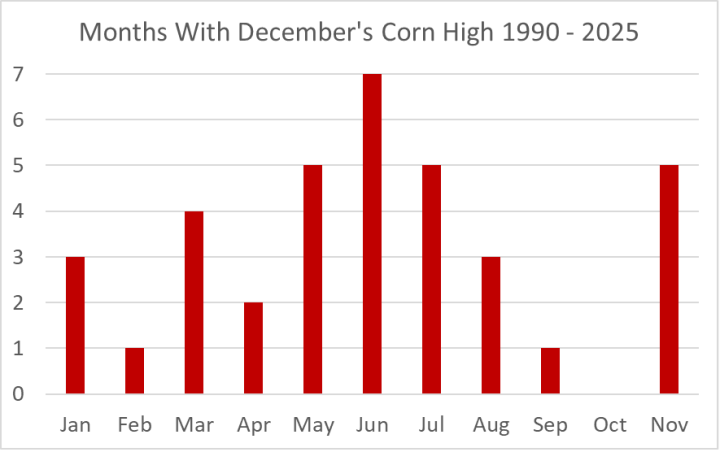
Since war is extremely unpredictable, it is difficult to know what will happen next. Historically though, in the last 35 years, the high for December corn futures in the year the crop is grown, only happened before April about 20% of the time.
Even since 2007, after the ethanol mandate, the high only happened by April about 20% of the time.
With fertilizer prices increasing significantly last week, some last-minute corn acres could switch back to beans. That could help reduce next year’s supply, and potentially alleviate some of corn’s massive carryout, which has kept prices suppressed for the last year.
Given current corn and soybean price levels, and now the fertilizer price increase, beans could be buying acres at the expense of corn.… Continue reading
 Ohio Ag Net | Ohio's Country Journal Ohio Ag Net | Ohio's Country Journal