Ohio farmers in counties undergoing property reappraisal in 2026 will see some encouraging news when it comes to Current Agricultural Use Value (CAUV). Updated values show a slight decline in many cases, reflecting the realities of today’s farm economy. Another significant change will affect how permanent pasture is valued, a move expected to benefit many livestock producers.
Those updates are the latest in Ohio’s ongoing effort to ensure farmland enrolled in CAUV is valued based on its agricultural productivity rather than its development potential.
Leah Curtis, associate general counsel for Ohio Farm Bureau, said it’s important for landowners to remember that CAUV values are updated every three years in conjunction with county reappraisals.
“These updates are significant because we’re seeing slight declines, holding steady to some extent with cash values, and that’s because we’re connected to the farm economy,” Curtis said. “As we’ve seen input costs particularly increase, that is really driving what we’re seeing with our CAUV values.”… Continue reading
By Dusty Sonnenberg, Field Leader, a project of the Ohio Soybean Council and Soybean Checkoff
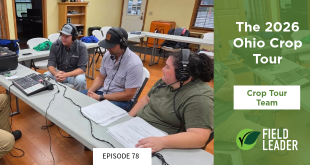
The 2026 Ohio Crop Tour, Sponsored by Field Leader, a project of the Ohio Soybean Checkoff, was a four-day crop tour that covered roughly 37 counties across the Buckeye state. Tour participants scouted a corn and soybean field in each county and reported on the crop conditions, any weed, disease or insect pressure, and a yield estimate. This episode of the Field Leader Podcast is a combination of those reports from the field scouts and their commentary. In summary, the Corn yield estimates averaged 201.4 bushels per acre on the North Leg and 214.7 bushels per acre on the South Leg. Soybean estimates averaged 55.6 bushels per acre in the north and 57.7 bushels per acre in the south.
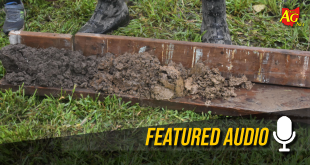
For Allen County farmer Matt Burkholder, no-till and cover crops are about more than changing how he farms. They are about leaving the soil better for the next generation.
Burkholder, president of the Ohio No-Till Council, shares his journey with Ohio Ag Net’s Allison Kinney, from planting his first cover crop in 2009 to seeing improvements in water infiltration, nutrient cycling, weed suppression, soil erosion, and input costs. He also discusses the challenges farmers face when adopting conservation practices and the importance of mentors along the way.
“I want to turn dirt into healthy soil for the next generation,” Burkholder said.
Listen to the full conversation to hear what Burkholder has learned through nearly two decades of working to improve soil health on his farm.… Continue reading
If you’ve done much fishing or cruising on Lake Erie’s western basin, you are likely familiar with the most remote and undeveloped of the three islands in the Bass Island chain: North Bass. With popular South Bass and Middle Bass islands to the south, North Bass has one of the richest and least disturbed cultural landscapes on Lake Erie. Archaeological evidence indicates human presence in the region as early as 17,000 years ago. Multiple Native Nations, including the Ottawa, Shawnee, Wyandot, and others, lived, traveled, and fished throughout the islands.
During the 1800s, North Bass played a role in border disputes following the War of 1812, before the island was officially placed within United States boundaries in 1913. The community flourished throughout the late 19th century as part of the renowned “Wine Islands,” producing grapes and wine that were shipped across the region. Historic homes, vineyards, fisheries, and community buildings once supported a population of nearly 200 residents.… Continue reading
Rain continued to be the big story across Ohio last week, slowing fieldwork in many areas while helping maintain soil moisture for crops. Despite the wet conditions, corn and soybean fields continue to show generally favorable progress as the growing season moves toward harvest. USDA reports there were 2.1 days suitable for fieldwork during the week ending Aug. 23.
Corn reaching the dough stage is at 87%, ahead of last week’s 81%, and ahead of the 81% five-year average. Corn reaching the dent stage is at 36%, ahead of last week’s 15% average, and above the 33% average. Ohio corn condition was rated 61% good to excellent, with 48% good and 13% excellent.
Soybean pod setting has reached 93%, ahead of last week’s 89% and above the 89% five-year average. Ohio soybean condition was rated 58% good to excellent, with 46% good and 12% excellent.
Oat harvest is 90% complete, behind the 99% five-year average.… Continue reading
Things are going pretty well here, and the good news is we’re harvesting tomatoes, and it’s not muddy. I can’t really say there’s much bad to report. Overall, we’re doing all right.
In the last two weeks, we probably received somewhere between 4 and 5 inches of rain across most of our area. At the same time, you didn’t have to go very far north or south to find areas that got much more. We heard reports of places receiving up to ten inches, and that’s just too much rain. We were fortunate to avoid some of those heavier rain events.
The wet conditions and humidity have brought some disease pressure. In our tomato crop, disease has set in across most of our fields. Some fields are worse than others, and the rain is definitely going to take some yield off the tomatoes. In corn, I’ve noticed a little disease on the lower leaves in a couple of fields, but I don’t think it’s going to result in a terrible yield hit.… Continue reading
Soybeans have long played an important role in feeding livestock. Today, however, soybeans are increasingly helping feed another growing source of protein: aquaculture.
As aquaculture production expands worldwide, soy-based feeds are creating opportunities for soybean farmers while supplying consumers with seafood ranging from catfish to shrimp.
Aquaculture, or the farming of aquatic organisms, remains a relatively small industry in the United States compared to poultry, pork, or beef production, but it continues to grow and evolve. The industry includes operations in food fish, shellfish, baitfish, sportfish, and aquaponics. The largest domestic sectors include production of catfish, trout, and largemouth bass.
For Erica Curles, Science Communicator with an M.Sc. in Aquaculture, the industry’s potential to help meet growing global demand for seafood is what first drew her to the field.
“When I was in high school, I wanted to work on a big world problem, and I really wanted to help feed the world,” Curles said.… Continue reading
For many farmers, the grain yield monitor is one of the most important precision agriculture tools on the farm. Yield maps help identify high- and low-performing areas, evaluate hybrid and variety performance, assess management practices, and guide future decisions related to fertility, drainage, seeding rates, and other inputs. In short, yield data often becomes the foundation for many precision agriculture decisions. However, the old saying still applies: “garbage in, garbage out.” If a yield monitor is not properly calibrated, the resulting maps and analyses can be misleading and may lead to costly management decisions.
Modern yield monitors estimate yield using several sensors, in particular grain flow (lb./sec), grain moisture, travel speed, and header position (turns data logging on and off). The mass-flow sensor, located near the top of the clean grain elevator, is particularly critical because it converts grain impact into an estimate of grain flow.… Continue reading
Fertilizer prices have become one of the biggest concerns facing farmers, particularly at a time when commodity prices are putting tremendous pressure on farm margins. Ohio Corn & Wheat is calling for more competition and transparency in the fertilizer market, and the Federal Trade Commission is now involved. Hear from leaders of Ohio Corn & Wheat about what they hope this investigation will change about the fertilizer industry.
Plus, Diversification remains a popular strategy for strengthening farm operations, but as margins remain tight and uncertainty continues across agriculture, the conversation has shifted from whether to diversify to how farmers can identify the right opportunities, evaluate risk, and build lasting value. Farm Credit Mid-America dives deeper into the conversation on this Ohio Ag Net Podcast, powered by Ohio Corn & Wheat.
Heavy August rainfall is creating manure storage and application challenges for some Ohio livestock producers.
Ohio State University Extension Manure Management Field Specialist Glen Arnold said parts of his region in northwest Ohio have received six inches or more of rain in August, leaving many manure haulers at a standstill during a time when they would typically be applying manure to wheat stubble and preparing for upcoming silage harvest.
“We’re in a situation where many of our manure haulers are at a standstill,” Arnold said. “Typically, they would be putting a lot of manure on wheat stubble at this time of the year.”
The additional rainfall can also quickly add volume to outdoor manure storage facilities.
“Every inch of water on an acre of ground is about 27,154 gallons,” Arnold said. For a large outdoor manure pond, several inches of rain can mean hundreds of thousands of additional gallons that eventually need to be pumped.… Continue reading
By Josh Winters, Jackson County Agriculture and Natural Resource Extension Educator
A few weeks ago, I attended a program with Dr. Jonh Currin, Virginia Tech Veterinarian Medicine Extension Specialist, as he talked about his experience with the Asian Longhorn Tick and Theileria in beef cattle. Dr. Currin explained that his first experience with the Asian longhorned tick was in 2017, as it was first detected on a sheep in New Jersey. The Asian longhorned tick is a smaller tick that can reproduce by parthenogenesis, or asexual reproduction. This means that only females are required to reproduce and can lay up to 3,000 eggs at a time. In 2020, the first Asian Longhorn Tick was found in Ohio (Gallia County) on a stray dog.
The Asian Longhorn Tick favors swampy, wooded, and taller grass areas. Fields that have these characteristics tend to have the higher probability for establishment where just simply walking through the field could leave someone covered with ticks.… Continue reading
The Ohio Department of Agriculture (ODA) and the United States Department of Agriculture (USDA) today announced the removal of a significant portion of the Asian Longhorned Beetle (ALB) quarantine area in Clermont County—marking encouraging progress in Ohio’s effort against the invasive species.
The newly-released 6.2-square-mile area includes the southeast portion of Tate Township south ofState Route 125. This removal represents the reduction in regulations since the initial quarantine was established in 2011. ALB was first discovered in Tate Township in 2011, and since then, 118,306 infested trees have been removed to prevent the pest’s spread. ODA and USDA’s Animal and Plant Health Inspection Service (APHIS) continue their partnership through the Ohio ALB Cooperative Eradication Program, which has produced strong results in limiting the beetle’s impact.
ODA Director Brian Baldridge and staff held an event for stakeholders from its ALB Eradication Program Office in Bethel to share an update on the progress made and what’s ahead for the program.
“ODA and USDA have worked tirelessly to fight this destructive pest,” Baldridge said.… Continue reading
President Donald Trump’s plan to temporarily increase beef imports to lower prices for American consumers is drawing strong opposition from cattle producers and industry organizations, including the National Cattlemen’s Beef Association and the Ohio Cattlemen’s Association.
Trump announced on Truth Social that the United States will allow up to 300,000 metric tons of beef products for ground beef to be imported over the next 90 days without an out-of-quota tariff. Trump said the imported beef will be sold at 25% below current market prices.
“Today, I concluded a deal to substantially lower the price of ground beef for working American families,” Trump said. He blamed the Biden administration for rising beef prices and the U.S. cattle herd falling to its smallest size in modern history.
Trump said the increased imports are intended to lower prices for consumers while giving the U.S. cattle industry time to rebuild its herd
The announcement, however, was met with immediate criticism from cattle producers.… Continue reading
By Alexander Lindsey, Laura Lindsey, Osler Ortez, Adapted from C.O.R.N. 2026-27
A large portion of Ohio received substantial rain and scattered storms the second week of August, resulting in waterlogged or flooded conditions in fields. Corn and soybean fields are mostly in the grain-filling stages, and the yield impacts of flooding will likely differ for each crop.
Soybeans are not very tolerant of flooding during the reproductive stages. Available literature has shown that a flood duration of 4 days or greater during reproductive stages (R2-R5) can result in significant yield loss (25% to 85%). Additionally, there is a wide range in varietal tolerance to flooding for soybeans, so every variety may not be impacted the same. Much of the yield penalty will likely be related to how long these fields stay flooded (or saturated). Corn yield losses from flooding during grain fill stages tend to be much lower, with yield losses being 5-7% for flooding up to 3 days, or around 15% if flooding lasts for 6-7 days at the R1-R2 growth stage.… Continue reading
Applications are being accepted for 2027 Ohio Farm Bureau Young Agricultural Professionals competitive events, including the Discussion Meet, Excellence in Agriculture, and Outstanding Young Farmer contests.
Farm Bureau’s strength depends on its members’ abilities to evaluate and discuss agricultural and community issues and decide on solutions that best meet the needs of Ohio Farm Bureau members. These competitive events for young agricultural professionals ages 18-35 foster these opportunities as well as recognize outstanding members for their achievements in business and their communities.
Discussion Meet
The Discussion Meet is designed to simulate a committee meeting where discussion and active participation are expected from each participant. This competition is evaluated on an exchange of ideas and information on a predetermined topic. Participants build basic discussion skills, develop a keen understanding of important agricultural issues and explore how groups can pool knowledge to reach consensus and solve problems.
Now I know this will read like I am crazy, but I want to share with you about an exciting frontier in animals, agriculture, and the companion animal world (cows, horses, pigs, sheep, dogs, goats, and zebras). I will also report on how a famous football star and a star actress enlisted genetic scientists to provide solace over the loss of a pet.
A major development in the 1940s was to collect sperm (termed semen) from a high-pedigree bull to inseminate a cow for a pregnancy. This became a very useful and profitable technique in the bovine industry. Most dairy herds today use artificial insemination now to breed their cows (AI).
It was easy in those early years for a dairy farmer to call an AI technician to his dairy and get each cow bred while in heat. Eventually, as herds grew larger, a farmer could receive training to do it.… Continue reading
The 16th annual Cultivating a Cure welcomed more than 320 attendees and raised $151,053 to support cancer treatment and prevention research through The Ohio State University Comprehensive Cancer Center – Arthur G. James Cancer Hospital and Richard J. Solove Research Institute and the College of Food, Agricultural, and Environmental Sciences (CFAES).
Established in 2011 by the Porteus family, Cultivating a Cure was founded to honor their passion for cancer research and prevention while also remembering those who have fought and continue to fight cancer. Cultivating a Cure recognizes the value realized when the agricultural community joins forces to address issues and challenges facing the industry, such as finding cures for cancer. Since its inception, Cultivating a Cure has raised more than $1.5 million.
“You’re hearing it more and more than you’ve heard it before that food and nutrition is an important part of our health,” said Bill Patterson, president of Ohio Farm Bureau.… Continue reading
Woodworking skills were on display during 4-H Woodworking Day at the Ohio State Fair Aug. 8. Members demonstrated their abilities with a variety of tools and showcased projects ranging from bookends and shelves to beds, tables, a chest of drawers, and even a wooden model semi-truck.
Eight clock trophies were presented, while the top 20% of participants in each class received Outstanding of the Day ribbons. Clock trophy winners were Xander Stacey, Clark County; Aiden Kroeger, Van Wert County; Alivia Brunswick, Mercer County; Brantley Rupp, Fulton County; David Gretz, Butler County; Lincoln Kahle, Putnam County; Lillian Adams, Muskingum County; and Nathan Crosser, Franklin County.
Thank you Randall Reeder for covering the event and the photos.
Clock trophy winners (J-8 to J-1): Xander Stacey of Clark County; Aiden Kroeger, Van Wert; Alivia Brunswick, Mercer; Brantley Rupp, Fulton; David Gretz, Butler; Lincoln Kahle, Putnam; Lillian Adams, Muskingum; and Nathan Crosser, Franklin County. They each received gifts from Milwaukee Tools, including bonus gifts for Xander and Aiden.
A nervous feeling that farmers might experience is answering the question: Will my 2026 grain production meet my grain marketing plan? It’s easy to speculate about the effect of rainfall and temperatures on crop condition and yield potential. Did the delayed planting turn out to be good because the corn was not pollinating during the peak of the July heat dome? Did early planted soybeans turn out better or worse than expected despite the emergence conditions? What is the production impact of getting or missing August rainfall? Farm managers may be feeling more ups and downs than a tractor seat crossing chiseled wheat ground.
How much production have you marketed so far? Since I’m asking for a friend, let’s go back to step 1 of our pre-harvest marketing plan. Expected production was based on production history, and we might have used our crop insurance Actual Production History, or APH.… Continue reading
 Ohio Ag Net | Ohio's Country Journal Ohio Ag Net | Ohio's Country Journal