By Emily Zuver, senior assistant accountant, Holbrook & Manter
Choosing between cash vs. accrual accounting is one of the most important financial decisions an agribusiness owner can make. Selecting the right accounting method can affect everything from tax planning and cash flow visibility to financing opportunities and long-term growth.
Sometimes our clients ask, what the “best” option is. The truth is, that depends. We help them decide what works best based on their business size, complexity, growth plans, and reporting needs.
Understanding cash vs. accrual accounting
The conversation around cash vs. accrual accounting starts with one simple difference: when income and expenses are recognized.
Cash accounting records revenue when you receive money and expenses when you pay them. It’s straightforward, easy to understand, and closely mirrors your bank account.
Accrual accounting recognizes revenue when it’s earned and expenses when they’re incurred, regardless of when cash changes hands. This provides a more complete picture of your company’s financial performance over time.… Continue reading
A soy-based firefighting foam developed with support from soybean checkoff investments is gaining attention as a biodegradable, PFAS-free alternative for fire departments. Ohio Ag Net’s own Dusty Sonnenberg talks with Chuck Stiver of Cross Plain Solutions and Next Gen Bio Solutions to explain how SoyFoam provides firefighters with a safer option while remaining compatible with existing firefighting equipment and practices. He also discusses how the product creates an additional market for soybeans and highlights a rebate program available through the Ohio Soybean Council.
The Ohio Department of Agriculture recently announce the approval for local sponsors to purchase agricultural easements on 58 family farms representing 5,165 acres in 36 counties.
Local sponsoring organizations, which include land trusts, counties, townships, and local soil and water conservation districts, receive funding from the Clean Ohio Fund to manage the Local Agricultural Easement Purchase Program (LAEPP). The easements ensure farms remain permanently in agricultural production. The program supports long-term growth of one of the state’s largest industries, food and agriculture.
To be eligible for the program, farms must be larger than 40 acres or next to a preserved farm, actively engaged in farming, participate in the Current Agricultural Use Value program, demonstrate good stewardship of the land, have support from local government and not be in close proximity to development. Landowners may use the proceeds of the easement in any way they wish, but many choose to reinvest the dollars in their farm operation.… Continue reading
This fall, the Ohio Cattlemen’s Association (OCA) will once again host its Roundup Meeting series at locations across Ohio. The meetings are open to all beef producers, and OCA membership is not required to attend.
Each meeting is free to attend and includes dinner, but registration is required. Meeting topics will vary by location, with each program featuring timely information designed to help producers prepare for the year ahead.
Dinner will be served at 5:30 p.m., followed by the program from 6-8 p.m.
New OCA members who join at the meetings will receive a free Allflex tagger provided by Merck Animal Health.
The 2026 Roundup Meeting schedule is:
October 22 – OSU Caldwell 17105 Bond Ridge Rd., Caldwell, OH 43724
Hay Sampling Program Results & Hay Improvement Strategies – Garth Ruff, The Ohio State University Extension
TMR & Beyond: Rethinking Winter Feeding – Dr. Haley Linder, The Ohio State University
For this 2026 harvest Cab Cam, brought to you by Precision Agri Services, Ty hops in the combine with Brad Williams in Highland County. Despite the challenging growing conditions throughout the summer, beans in that part of the state are turning out alright, but the corn may be really good.… Continue reading
A fourth generation Missouri corn, soybean and cattle farmer, who is now in a top leadership position at the USDA, spent time in Ohio this week listening to farmers’ concerns and sharing how his organization is trying to make positive changes to help producers across the country.
Richard Fordyce currently serves as USDA Under Secretary for Farm Production and Conservation (FPAC). This position includes oversight of the Farm Service Agency (FSA), Natural Resources Conservation Service (NRCS), Risk Management Authority (RMA), and the FPAC Business Center. All these mission areas work toward the efficient delivery of conservation, farm loans, crop insurance, disaster assistance, and other key USDA programs.
During the first Trump administration, Fordyce served as the Administrator of USDA’s Farm Service Agency.
While in Ohio, Fordyce had the opportunity to visit farmers on their operations.
“This trip is about going and talking to farmers and finding out what is going on, and if there something we can do to be more helpful,” Fordyce said.… Continue reading
The Ohio Historic Family Farms program through the Ohio Department of Agriculture is such a neat way to recognize those families who have been farming the same land for generations. It is quite a feat to think about, really. This year, as America celebrates its 250th birthday, there are Ohio farms that have remained in the same family for more than 200 years.
Some of these families were farming their land before the Civil War, before tractors, before electricity, before automobiles and, in some cases, before canals and railroads made it much easier to move agricultural products across Ohio.
So, what did farming look like when some of these farms got their start?
For many early Ohio farm families, the first task was simply clearing the land. Much of Ohio was heavily forested, and turning wooded acreage into productive farmland required an incredible amount of work.
As farmers look ahead to the 2027 growing season, managing input costs will be an important part of building a profitable plan. In this featured audio, Ohio Ag Net’s Joe Everett visits with Beck’s Hybrids agronomist Mike Hannewald about prioritizing fertility investments, starting with lime and focusing on critical phosphorus and potassium levels. Hannewald also discusses where farmers may have flexibility to reduce or delay maintenance applications while emphasizing the importance of using soil-test data, agronomic information and individual farm economics to guide those decisions. He encourages farmers to run the numbers and make informed fertility decisions.
By Dusty Sonnenberg, CCA, Field Leader, a project of the Ohio Soybean Council and Soybean Check-off
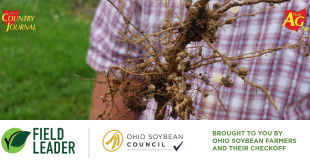
October is SCN Action Month. Monday, October 5th was National Nematode Day, and during the entire month of October attention is directed toward the number one yield robber of soybeans nationwide. It is a problem that costs soybean growers millions of dollars annually. BASF has detected Soybean Cyst Nematode (SCN) in more than 80% of the soil samples they have collected. Justin Moritz is with BASF and has been studying SCN for many years.
“It is fall, and I always love this time of year because it is when we get our report card and see how we actually did throughout the year with all the decisions we made, what the weather impacts were, all those sorts of things,” said Moritz. “Growers get the opportunity to both see how they did from a yield potential or a final outcome in a yield scenario, as well as having the opportunity to start planning for next year.”… Continue reading
For Week #10 of Feeding Farmers, Ohio Ag Net’s Ty Higgins headed to Henry County and had lunch with Botjer Farms. Darrell Botjer, along with his wife, Tina have row crops and also have found a unique diversification opportunity off of the freeway in North Baltimore. Learn what the harvest numbers are looking like and what is on Darrell’s mind as he brings in this year’s crop.
Reaching 100 years as a family farm takes more than good luck. It requires generations of hard work, difficult decisions and a commitment to carrying the operation forward despite challenges along the way.
For Trails End Farm in Belmont County, that commitment has been tested many times during the last century. From dairy cattle to beef production, from economic challenges to tremendous losses, the Dunfee family has continually adapted while preserving the values that have defined the farm for generations.
The operation today encompasses 216 owned acres, an additional 75-acre farm and approximately 500 rented acres. The family currently maintains anywhere from 80 to 100 head of beef cattle while also producing hay for both on-farm use and commercial sales.
The late Dean Dunfee and his wife, Loretta, purchased the farm in 1989, becoming the third generation of the family to own the operation. Together, they raised their five children, Crystal, Melissa, Allison, Eric, and Tyler, alongside the livestock and daily work of the farm.… Continue reading
Agricultural spray drones continue to gain momentum across Ohio, and a newly formed statewide association aims to unite operators through advocacy, education, and the sharing of best management practices. Dr. John Fulton of The Ohio State University discusses the group’s goals, including representing the industry on policy issues and helping operators navigate this rapidly evolving technology. He also shares how spray drones are creating new opportunities for farmers and custom applicators by improving the ability to make timely applications when field conditions, weather, or labor challenges arise.
The Ohio AgriBusiness Association (OABA) is now accepting applications for its upcoming 2027 LAUNCH class, a targeted leadership program designed specifically for professionals working across the Buckeye State’s agricultural sector. Applications for the premier development experience are due by November 2, 2026.
Short for Leaders Achieving Unexpected New Career Heights, the LAUNCH program is hosted by OABA in partnership with Shift-ology Communication. It aims to help Ohio agribusinesses elevate their people, foster new ideas, and strengthen the broader agricultural industry. More than 200 agribusiness professionals have graduated from the initiative since its inception.
Navigating today’s agricultural landscape requires leaders capable of handling shifting workforce dynamics, evolving consumer demands, environmental stewardship, and complex regulatory environments. The LAUNCH curriculum addresses these modern demands by helping rising talent build critical business acumen and communication skills.
The course is tailored for emerging leaders and employees at any career stage, from entry-level staff to seasoned managers, who want to make a larger impact within their companies.… Continue reading
With Ohio farmers in the middle of harvest and facing sharply higher diesel costs, the Ohio Soybean Association (OSA) is calling on Gov. Mike DeWine to build upon important steps taken last week on the gas tax to provide additional temporary fuel-cost relief for the state’s farmers.
The association is urging Gov. DeWine to direct a temporary pause in enforcement of penalties associated with dyed diesel fuel for agricultural operations during the critical harvest season.
While farmers depend on diesel to power combines and tractors, they also rely on diesel to haul grain to market. Allowing dyed diesel to temporarily be used on-road will give farmers the flexibility of tapping into on-farm fuel supplies that may have been purchased at prices much lower than historic highs recently reached in the diesel market. With fuel representing a significant operating expense, rapidly rising diesel prices are adding another layer of financial pressure at a time when producers are already confronting elevated costs across their operations.… Continue reading
This column wraps up a 30-plus-year stint as Ohio Country Journal’s outdoor columnist. As a full-time freelance outdoor writer, it has become my longest-running “assignment” as well as my favorite. I contribute outdoor columns and feature articles to regional and national magazines, but being from Ohio, this one has always been special. In Ohio’s Country Journal, I got to cover outdoor news in which I have a vested interest and personal experience and could concentrate on news of specific interest to fellow hunters and anglers here in the Buckeye State.
Because of the rural nature of the readership that Ed Johnson asked me to reach so many years ago, I have tried to tailor my coverage not only to outdoors-minded folks, but to landowners who have an interest in knowing the hunting and trapping season dates and regulations, land use subjects, and conservation news that affects you.… Continue reading
For the first Cab Cam of the 2026 harvest, brought to you by Precision Agri Services, Ty heads to Warren County to visit with Mike Lutmer. Find out how his soybeans are turning out and why he is using a row crop header in this particular field. They also talk about the prospects for Ohio’s hay crop, which may be concerning for those looking for higher quality hay.… Continue reading
The latest USDA numbers gave the grain markets plenty to digest as harvest continues across the Corn Belt. Soybean stocks came in tighter than traders expected, wheat offered few surprises and corn took the biggest hit after USDA lowered feed demand.
Beans
On a positive note, after the USDA stocks report, there seem to be fewer beans remaining at the end of the marketing year than traders estimated. This should keep a floor under bean prices longer term. However, early yield reports in some areas of the eastern belt are as high as 20% above “normal,” with few growers east of the Mississippi River reporting below-normal yields. Rain has kept many farmers in the western belt from starting harvest, and we won’t know until the middle of this week whether the heavy rains have caused any quality issues.
If bean yields remain above normal, this could cap upside potential until more is known about South America’s weather in late December and early January.… Continue reading
By Dusty Sonnenberg, CCA, Field Leader, a project of the Ohio Soybean Council and Soybean Checkoff
On the latest edition of Roots to Results (a project of the Ohio Soybean Council), Taylor Dill, director of research for the Ohio Soybean Council, was joined by Laura Lindsey, OSU Extension state soybean specialist; Seth Naeve, University of Minnesota soybean agronomist; and Horacio Lopez-Nicora, OSU Extension soybean pathologist and nematologist. The four researchers discussed the recent reports of discolored soybeans being noticed as harvest ramps up across the state and what some of the potential causes may be.
Dill: We are about 2% into harvest in Ohio, and we have been hearing great yield reports. However, we have been hearing a lot about discoloration in our soybeans. What are the main causes of discoloration on soybean seeds?
Lopez-Nicora: Seed discoloration can have several causes. From the pathology standpoint, fungi like Cercospora or Diaporthe can cause discoloration.… Continue reading
Ohio’s apple growers are harvesting a strong crop this fall despite early concerns from a spring frost that damaged many fruit blossoms. In this interview, Ohio Ag Net’s Allison Kinney talks with Frank Becker with Ohio State University Extension about how growers managed heavy fruit loads, disease and pest pressures, and the season-long decisions that influence both crop quality and profitability. He also shares insights into new apple varieties being developed for the future through Ohio-based breeding programs.
As harvest approaches across the Buckeye State, cold and wet late-season weather has set the stage for disease challenges that Ohio corn growers haven’t had to deal with at this level in recent years. Among the primary concerns moving into fields this autumn is vomitoxin, an ear mold issue that threatens grain quality and market acceptance.
“Vomitoxin starts with an ear mold, specifically Gibberella, which is our main culprit here in Ohio,” said Jason Greve, senior agronomist with Advanced Agrilytics. “It is more predominant typically in the Eastern Corn Belt. That ear mold specifically starts on the tip of that ear and can express heavy levels of DON, or vomitoxin, where we can see some market quality issues when we take that grain to market.”
With conditions ripe across much of the region, farmers and agronomists are having little trouble finding the beginning signs of vomitoxin in corn fields nearly ready for harvest.… Continue reading
 Ohio Ag Net | Ohio's Country Journal Ohio Ag Net | Ohio's Country Journal